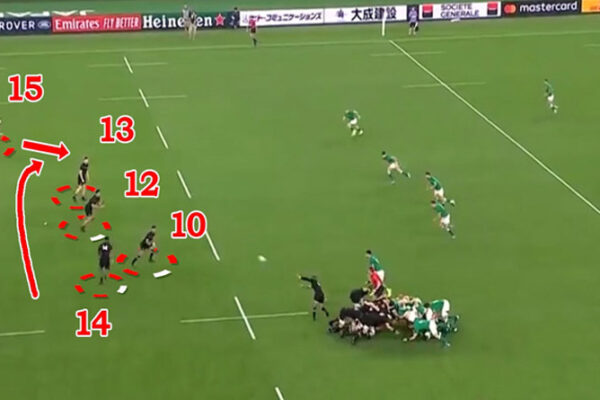

How to Become a Rugby Coach in the USA: Certification, Courses and Requirements.
What do you need to coach rugby in the United States?
Before planning your first rugby practice, you need to make sure you are properly registered and accredited. USA Rugby uses the term “compliant coach” for a coach who has completed the administrative, safeguarding, safety and education requirements attached to the role.
Register as a coach for the current season
You must hold an active USA Rugby membership in a coaching role through Rugby Xplorer.
Complete annual SafeSport training
SafeSport completion is required annually for coaches aged 18 or older and is connected to athlete welfare on and away from the field.
Pass the required background check
Coaches aged 18 or older need a background check every two years. USA Rugby recommends starting early because processing can take time.
Complete Rugby’s Safety Basics
This safety foundation includes the World Rugby online courses Rugby Ready and Concussion Management for the General Public.
Hold a current coaching accreditation
Your accreditation must match the form of rugby you coach. Non-contact rugby and tackle rugby do not follow exactly the same route.
Three questions almost every new rugby coach asks
“Do the requirements apply if I am only an assistant coach?”
Yes. If you provide technical or tactical instruction to players, USA Rugby includes you within its definition of a coach, even when your title is assistant coach.
“Can I begin by coaching flag or touch rugby?”
Yes. Non-contact rugby can be an accessible starting point, particularly in youth programs. Moving into tackle rugby, however, requires the appropriate contact coaching accreditation.
“Will certification teach me everything I need?”
It gives you essential safety and coaching foundations. Learning to design practices, correct individual skills and build a team system remains a longer coaching process.




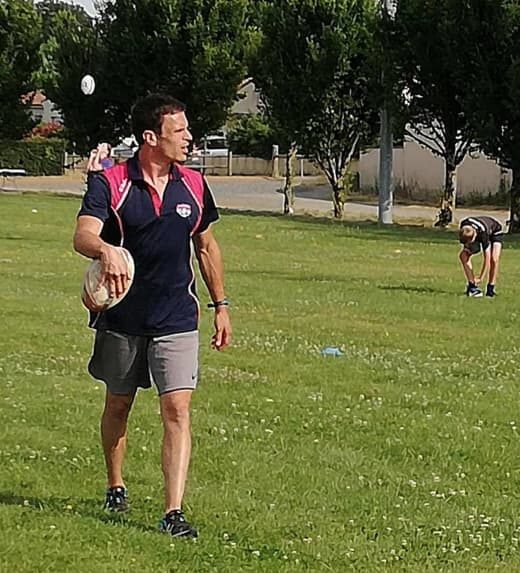
Which rugby coaching course should you take?
The correct course depends less on your ambition than on the rugby environment in which you are currently coaching. A first-year high school assistant working on tackling does not need the same pathway as a volunteer running flag rugby or an experienced college head coach building an entire program.
USA Rugby Non-Contact Coach
Intended for coaches working only with forms of rugby that do not involve tackling, including flag, tag, rookie and touch rugby.
- Minimum age: 17
- Four online World Rugby courses
- Certificates uploaded through the Learning Center
- Not sufficient for coaching tackle rugby
World Rugby Level 1 Coach
The main entry qualification for coaches involved in tackle rugby at youth, high school, college or adult club level.
- Minimum age: 17
- Eight-hour in-person course
- Online coursework also required
- Current listed price: $125
World Rugby Level 2 Coach
Designed for coaches ready to progress toward athlete development, program building and more advanced coaching practice.
- Minimum age: 18
- Level 1 held for at least one year
- Two-day, 16-hour in-person course
- Current listed price: $350
World Rugby Level 3 Coach
A demanding pathway for coaches working in, or seeking to enter, professional and high-performance rugby environments.
- Admission by application
- Delivered across approximately one year
- Online sessions and an in-person camp
- Includes an in-person assessment
Do not wait to know everything before you begin
Every experienced rugby coach was once the person wondering how long a drill should last, when contact should be introduced or why a defensive line kept breaking despite looking organized during an unopposed walkthrough.
Your first official course should give you a safer and more structured place to start. From there, focus on a few priorities at a time: player welfare, clear explanations, useful feedback and practices that become progressively closer to the game.
An official qualification answers the question, “Am I properly accredited to coach this form of rugby?” Continued coach education answers a different question: “What should I teach at Tuesday’s practice, and how can I help my players understand it?” A developing coach needs both.
Course formats and prices can change. Check the USA Rugby coaching pathway and the current course calendar before registering.
What should a new rugby coach teach first?
New rugby coaches often feel pressure to build an entire playing system immediately. In reality, the best starting point is usually smaller: establish safe individual behaviors, give players a limited number of shared defensive rules and gradually place those skills under realistic pressure.
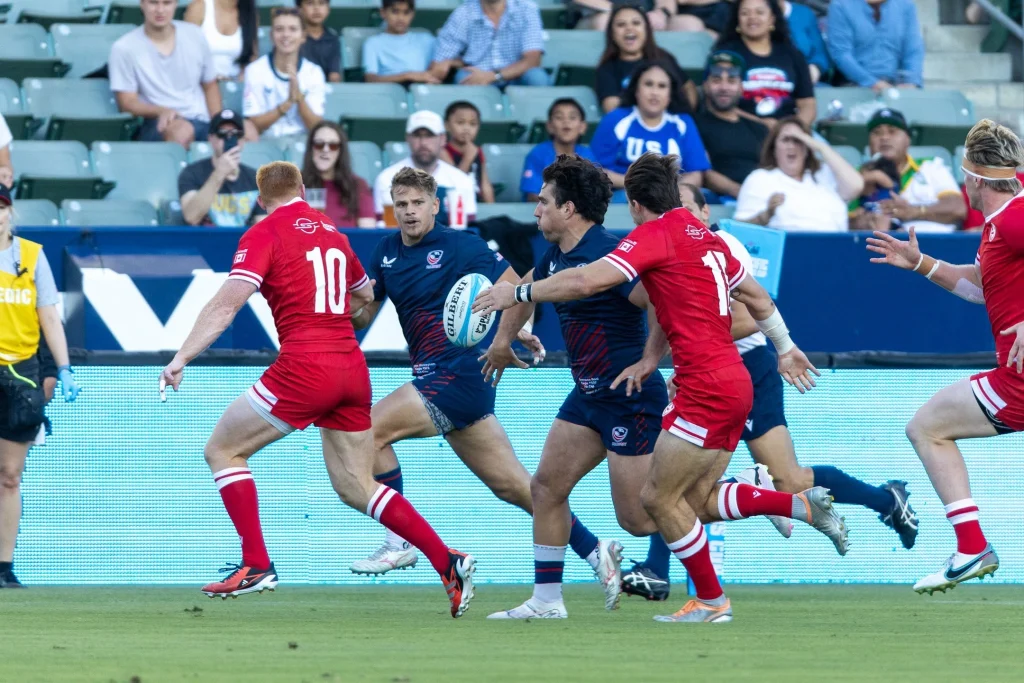
Teach tackle technique before tackle intensity
Contact should be introduced progressively. Begin with body position, approach footwork and controlled execution before increasing speed, uncertainty or physical pressure. These rugby tackling drills provide a progression rather than asking beginners to solve everything at full speed.
Separate tackling from team defense
Tackling is an individual action. Defense is a collective system. A player can make a technically good tackle while the defensive line still loses its connection, spacing or inside support. Work on both subjects, but make the purpose of each practice activity clear.
Build the defensive approach before contact
Many missed tackles begin before the collision. Defenders need to control their speed, keep their feet active and arrive in a position from which they can react. Our guide to tackle footwork and defensive approach explores this important connection.
Give players shared rules around the breakdown
New teams often leave gaps near the ruck because defenders do not share the same language or responsibilities. Start by clarifying who protects the immediate threat, how the line reconnects and when players can fold. This is the foundation for defending rucks effectively.
Three questions to ask after every rugby practice
A beginner coach does not need a complicated evaluation system. A few honest questions will often reveal more than a long list of statistics.
Did the players understand the objective?
If players cannot explain what they were trying to improve, the message may have been too long, too technical or divided between too many priorities.
Did the practice include a real decision?
Repetition can develop movement, but rugby also requires players to observe, choose and adapt. Progressively introduce the information they will encounter in a match.
What is the one priority for next time?
Avoid correcting every fault at once. Select the behavior that will produce the clearest improvement and build the next practice around it.
Knowing exercises is not the same as understanding the game
A coach can collect hundreds of rugby drills and still struggle to decide which one the team actually needs. The exercise is only the tool. The starting point should always be the problem you are trying to solve.
If a defensive line breaks near the ruck, another generic tackling exercise may not provide the answer. The real issue could be tackle technique, spacing, an unclear role at the breakdown, slow defensive movement or a failure to identify the attacking threat. The coach must first understand what happened before deciding how to work on it.
Up Rugby Academy courses are built from hundreds of hours of match analysis. Their purpose is to reduce the time coaches spend searching, sorting and trying to connect isolated information. Tactical details are organized into clear frameworks that can be adapted to high school, college, club or performance rugby in the United States.
The courses also include PowerPoint presentations that coaches can use with their players. Instead of rebuilding every explanation from scratch, the coach can introduce the structure, establish common language and arrive at practice with players who already understand what they are trying to achieve.
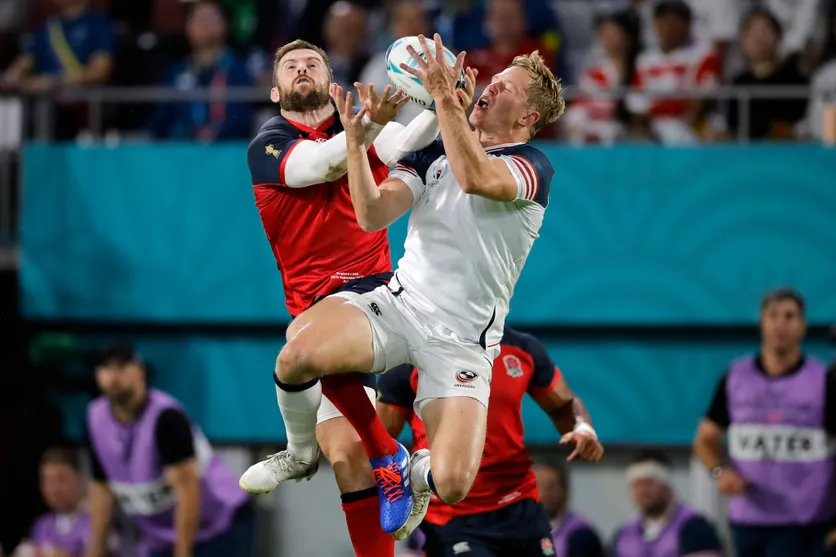
Move from the match problem to the practice field
This four-stage process helps a rugby coach avoid selecting exercises simply because they look interesting.
Identify the problem
Use match observation to determine whether the issue is technical, tactical, physical, collective or linked to decision-making.
Define the team rule
Decide what you want players to recognize and which shared behavior should appear when the same situation returns.
Choose the practice
Select or adapt an activity that repeatedly exposes players to the relevant movement, information and decision.
Review the transfer
Look for the behavior in a realistic practice and then in competition. If it does not transfer, adjust the coaching process.
Before choosing a rugby drill, ask:
- What match situation are we preparing the players to recognize?
- What behavior should improve when the situation appears again?
- What information will the player need to observe before making a decision?
- How will I know whether the exercise has improved match performance?