Back
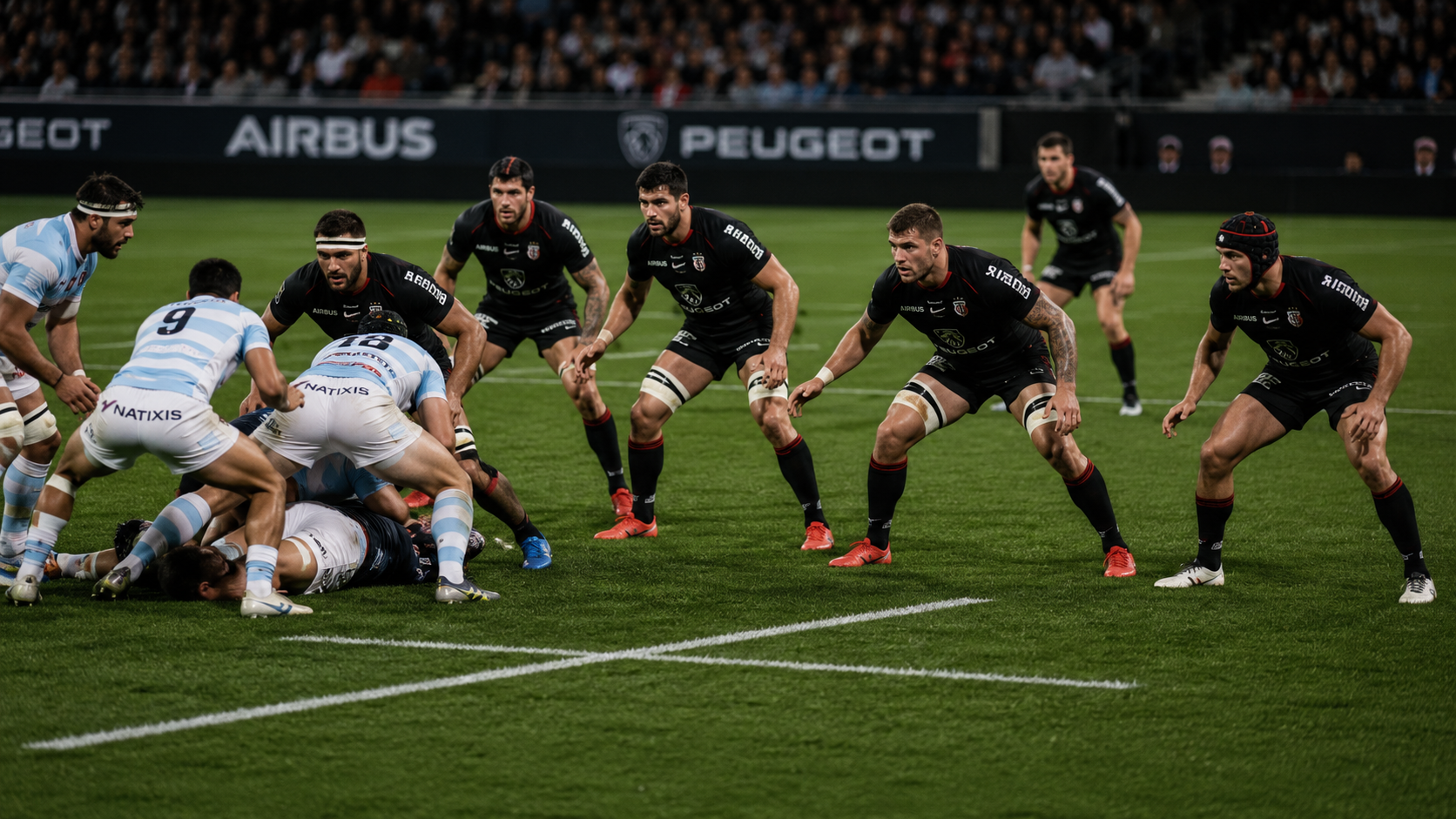
Rugby defensive ruck structure with organised defensive line

Rugby Defence Drills: Tackling Skills and Defensive Systems

Rugby defence coaching guide

Build Defence from the Tackle to the Full System

Effective rugby defence begins long before the collision. Players must read the attack, protect space, control their approach, complete the tackle safely and reconnect with their teammates after every breakdown.

This guide gives rugby coaches a progressive training framework combining individual tackling drills, defensive footwork exercises, connected line-speed work and realistic multi-phase practices.

6 practical drills Clear exercises with observable coaching points.
Individual to collective Progress from one defender to a connected defensive line.
Complete session plan Turn each defensive skill into match-related training.
01

Track and Close

Read the ball carrier, protect the inside and control the available space.

02

Tackle and Recover

Complete the contact safely, return to the feet and prepare for the next action.

03

Connect and Press

Maintain spacing, communicate clearly and move forward as one defensive line.

04

Rebuild and Adapt

Reorganise around each new ruck and defend effectively across multiple phases.

Looking specifically for contact-technique exercises? Use our complete progression of individual and two-player tackling practices.

Explore 7 rugby tackling drills →
!
Contact-training reminder: increase speed, opposition and contact intensity progressively. Adapt every exercise to the players’ age, experience and current union regulations, and follow the World Rugby Tackle Ready guidance.

Core Principles Every Rugby Defence Drill Should Develop

Strong rugby defence is not a collection of isolated tackles. It is a sequence of connected decisions made before, during and immediately after contact.

Before choosing a rugby defence drill, the coach should identify one clear behaviour to develop. Players must understand where the threat is, which space they are protecting, how they remain connected and what their next defensive action will be.

Main coaching principle

Give every defensive exercise one primary objective and a small number of observable coaching points. Players learn more effectively when the coach can identify exactly which behaviour should improve.

01

Control Space Before Contact

The defender must read the direction of play, protect the inside and reduce the ball carrier’s options without committing too early.

Defensive tracking exercises →
02

Arrive Balanced for the Tackle

Line speed must lead into controlled footwork. Shorter adjustment steps allow the defender to react, place the feet and complete the tackle safely.

Tackle footwork drills →
03

Stay Connected as a Defensive Line

Defenders must communicate, maintain effective spacing and move with a shared intention. Individual speed has limited value when gaps appear between players.

04

Recover and Rebuild

After every tackle, defenders must return to the game, identify the new breakdown and reconnect before the attack launches its next phase.

Defensive organisation around the ruck →
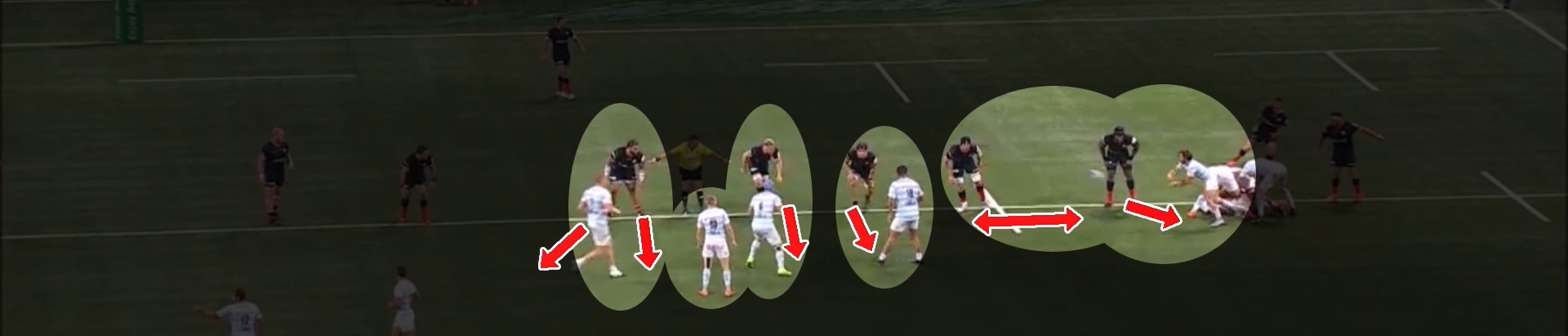
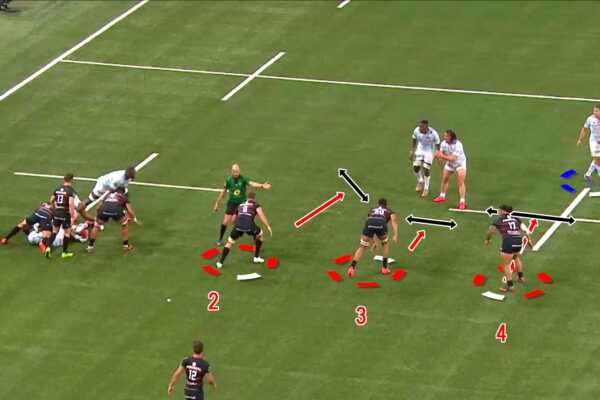
Connected defensive line Rugby rush defence showing connected defenders moving forward around the ruck
The defensive line must move forward together while the players closest to the ruck protect the immediate attacking threats.

Rush Defence Requires Connection, Not Just Speed

A rugby rush defence should be trained as a collective timing problem, not as a sprint competition. If one defender launches early while the inside or outside connection remains passive, the pressure creates a gap instead of closing space.

Effective rush defence training should therefore connect alignment, communication, line speed, controlled footwork and the ability to reorganise after the tackle.

  • Organise before the ball leaves the ruck
  • Launch from a shared defensive cue
  • Maintain inside and outside connection
  • Adjust when the ball is passed wider
  • Recover and fold after the tackle

What Rugby Coaches and Directors Say

Here are a few testimonials from coaches and rugby directors who have taken our courses. Some coaches, particularly those working at higher levels, have asked not to be identified publicly.

02 · Individual defensive skills

How to Coach the Defensive Approach Before the Tackle

Many missed tackles begin before contact. A defender may understand the tackle technique but still arrive from the wrong angle, close space too quickly or lose balance when the ball carrier changes direction.

Rugby coaches should therefore train defensive tracking and tackle footwork as specific skills. The player must first control the attacker’s space before committing to the final contact.
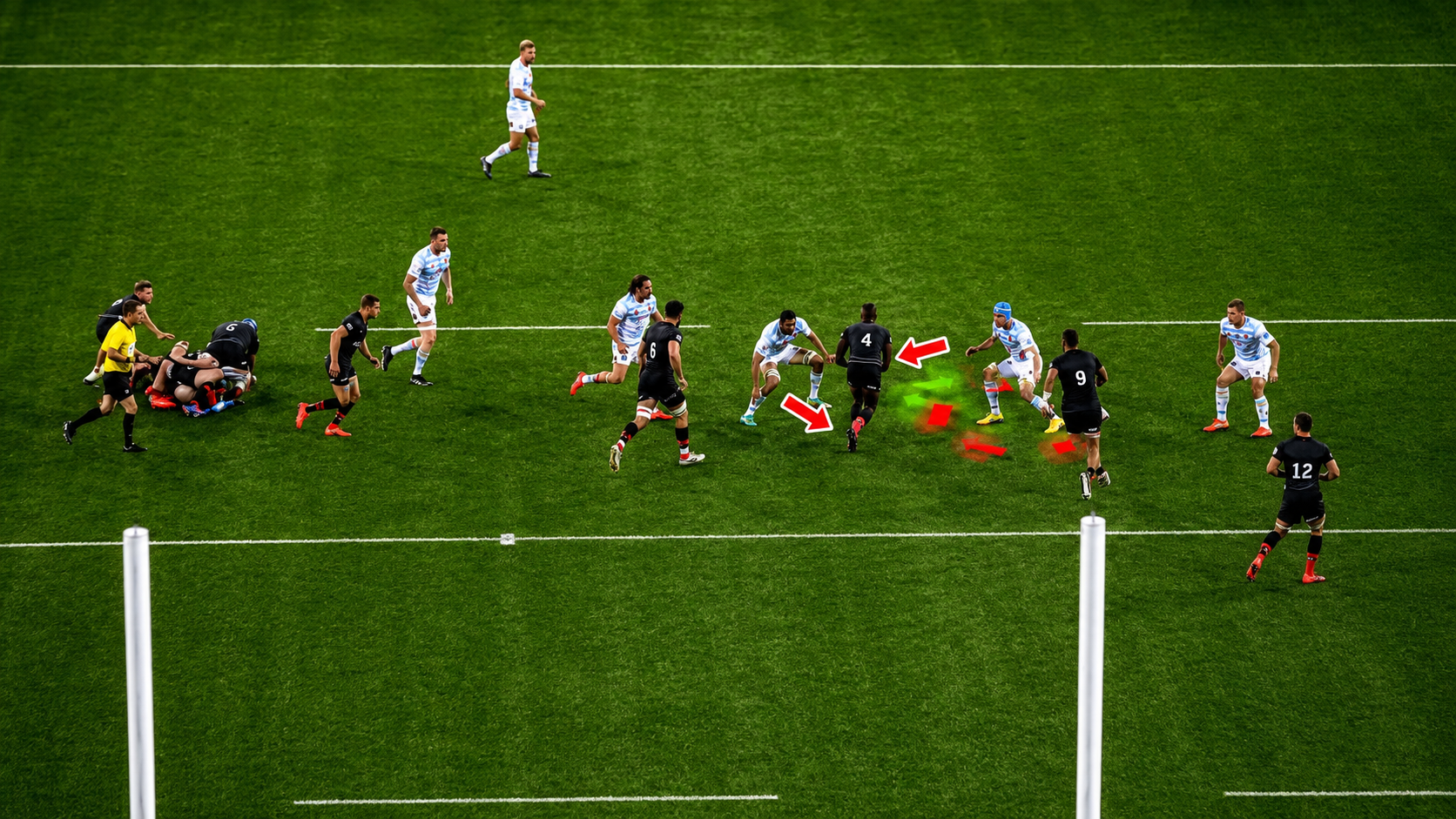
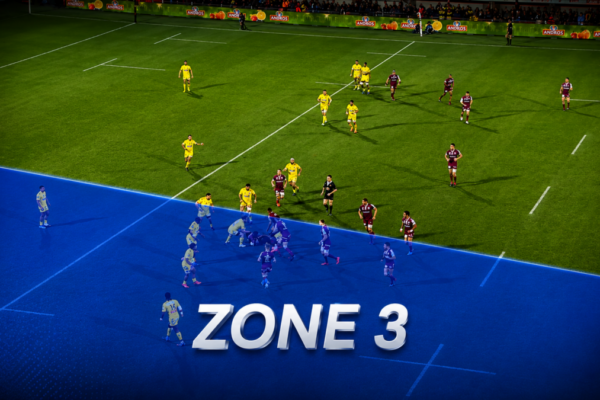
Tactical picture Rugby defender controlling the tackle approach and inside space during a defensive phase
The defender closes the inside option while remaining balanced enough to react to the ball carrier’s final movement.

Four Decisions Before Contact

1 Read the direction

Identify where the ball has come from and where the attack is moving.

2 Protect the inside

Stay between the ball carrier and the most dangerous inside space.

3 Control the distance

Gain ground first, then shorten the steps as the attacker gets closer.

4 Commit at the right moment

Accelerate into the tackle only when the attacker’s options are reduced.

01
Rugby defence drill

Track, Close and Control the Ball Carrier

Create a narrow channel with one attacker and one defender. The defender begins slightly inside the ball carrier and must guide the attacker towards the outside while progressively reducing the available space.

Exercise organisation

  1. Mark a channel approximately 8–10 metres long.
  2. Adapt the width to the players’ age and ability.
  3. Position the defender slightly inside the attacker.
  4. Begin without full contact, using a touch or hip tag.
  5. Alternate the starting side after several repetitions.

What the coach should observe

  • Eyes remain on the ball carrier.
  • Inside space is protected throughout the approach.
  • Feet do not cross during lateral adjustment.
  • Final steps become shorter and more frequent.
  • The defender remains square and balanced.
  • Acceleration occurs only after control is established.
Main coaching intention

The objective is not to reach the attacker as quickly as possible. The defender must first remove the easiest attacking option, control the ball carrier’s movement and arrive in a position from which the tackle can be completed safely.

Progress the Exercise Gradually

Level 1 Walking speed with a predetermined running line.
Level 2 Attacker can change speed inside the channel.
Level 3 Attacker can use late footwork in either direction.
Level 4 Finish with a controlled tackle when technique is stable.

Build a Smarter Ruck Defence

Build clear and effective defensive structures around the ruck. Learn how to organise the fold, assign roles, protect key spaces and keep your defensive line connected from phase to phase.

03 · Tackle and recovery

Tackle, Recover and Reconnect with the Defensive Line

A defender’s responsibility does not finish when the ball carrier reaches the ground. The player must complete the tackle safely, release the carrier, return to the feet and identify the next attacking threat.

Rugby defence training should therefore connect tackle technique with recovery speed, communication and defensive line reorganisation.
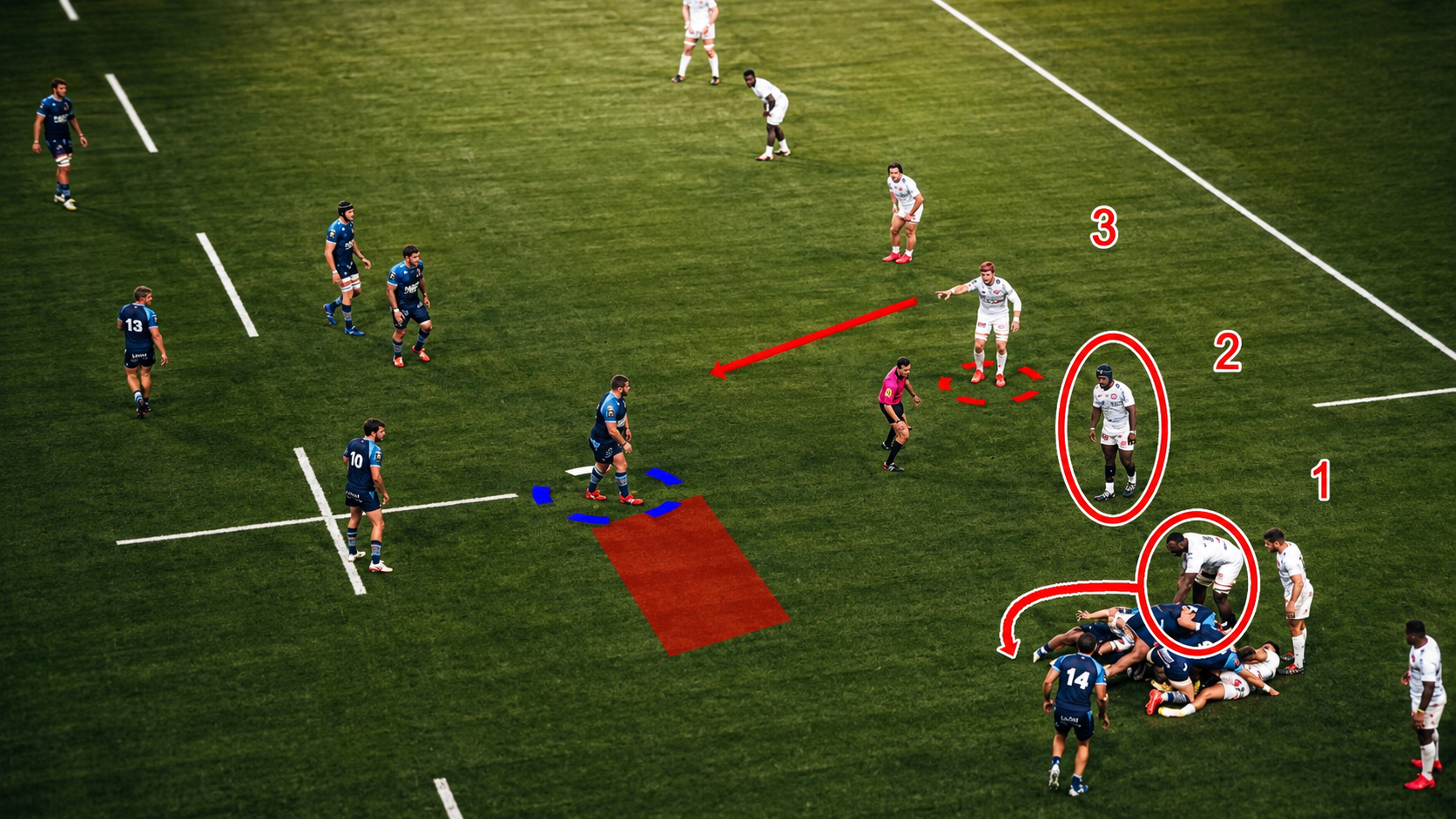
Multi-phase defence Rugby defenders recovering from the breakdown and reorganising into the next defensive line
After the tackle, defenders must recover and rebuild the next line before the attack plays again.
1

Finish

Complete the tackle with control and maintain safe technique.

2

Release

Release the ball carrier and leave the tackle area legally.

3

Recover

Return to the feet and scan for the next attacking threat.

4

Reconnect

Fill the required space and communicate with nearby defenders.

Main coaching principle

Do not reward a fast second action if the first tackle has not been completed correctly. Quality of contact, legal release and a balanced recovery must come before speed.

02
Rugby tackling and defence drill

Tackle, Reload and Defend Again

Mark two defensive areas several metres apart. The defender completes a controlled tackle in the first area before recovering and moving into position to defend a second attacking action.

Exercise organisation

  1. Create two contact areas approximately 8–10 metres apart.
  2. Place one attacker or tackle shield in each area.
  3. The defender completes the first tackle under control.
  4. A second attacking threat is activated by the coach.
  5. The defender recovers and moves into the next defensive position.
  6. Alternate the direction of the second action.

What the coach should observe

  • The first tackle is fully completed.
  • The defender releases and returns to the feet safely.
  • Eyes move quickly towards the next threat.
  • The player communicates while recovering.
  • The defender runs into position before adjusting the feet.
  • Technique is maintained as fatigue increases.
Progression 1 Tackle shield followed by a recovery run to a marked cone.
Progression 2 Controlled tackle followed by a second hip-tag action.
Progression 3 The second attacker can select between two running lines.
Progression 4 Add teammates and transfer the skill into multi-phase defence.

04 · Collective defensive movement

How to Coach Defensive Line Speed and Rush Defence

Defensive line speed does not mean asking every player to run forward as quickly as possible. Effective rush defence requires connected defenders to organise early, communicate and apply pressure with the same collective timing.

One defender moving ahead of the line can create an attacking gap. The objective of line-speed training is to reduce the opposition’s time while preserving spacing, balance and inside-to-outside connection.

Main coaching principle

Judge the movement of the complete defensive line, not only the speed of the first defender. Pressure is effective when the attack loses time without the defence losing its connection.

01

Align

Rebuild the line before the scrum-half plays the ball.

02

Scan

Identify attackers, spacing and the most immediate threats.

03

Communicate

Nominate responsibilities and confirm inside connection.

04

Launch

Move together from a shared cue as the ball is played.

05

Adjust

Shorten the steps and react as the attacking picture changes.

03
Rush defence drill

Connected Line Speed: From 2v2 to 4v4

Position two defenders opposite two attackers in a marked area, with the ball beginning beside a cone representing the breakdown. The defenders must organise, communicate and launch together when the ball is passed.

Exercise organisation

  1. Mark an area approximately 12–15 metres wide.
  2. Begin with two defenders against two attackers.
  3. Place the ball beside a marked breakdown area.
  4. Allow the defence time to align and communicate.
  5. Launch the defensive line when the ball is passed.
  6. Reset from different positions and directions.

What the coach should observe

  • Organisation before the ball is played.
  • Clear communication between defenders.
  • Shared timing during the defensive launch.
  • Consistent spacing throughout the movement.
  • Protection of the inside space.
  • Controlled footwork near the ball carrier.
Progression 1 Two attackers follow predetermined running lines.
Progression 2 The ball carrier can pass or continue running.
Progression 3 Increase the exercise to three or four defenders.
Progression 4 Add a second breakdown and require the line to reload.
Reward the correct behaviour

Do not assess the drill only by whether the attack is stopped. Reward early organisation, collective line speed, communication and the ability to stay connected when the ball moves beyond the first receiver.

Make the 1-3-3-1 Work

Stop relying on rigid patterns that disappear under pressure. Learn how to build, teach and adapt a complete 1-3-3-1 attacking framework your players can understand, execute and evolve on the field.

05 · Multi-phase defence

How to Reorganise the Defensive Line Around Multiple Rucks

Every tackle disrupts the defensive system. Some players are involved in the contact, others are recovering from the previous phase and the remaining defenders must protect the spaces available around the new breakdown.

A rugby defensive system gives players common principles for rebuilding the line under pressure. It should help them identify the new ruck, communicate and regain connection without relying on a perfect static formation.
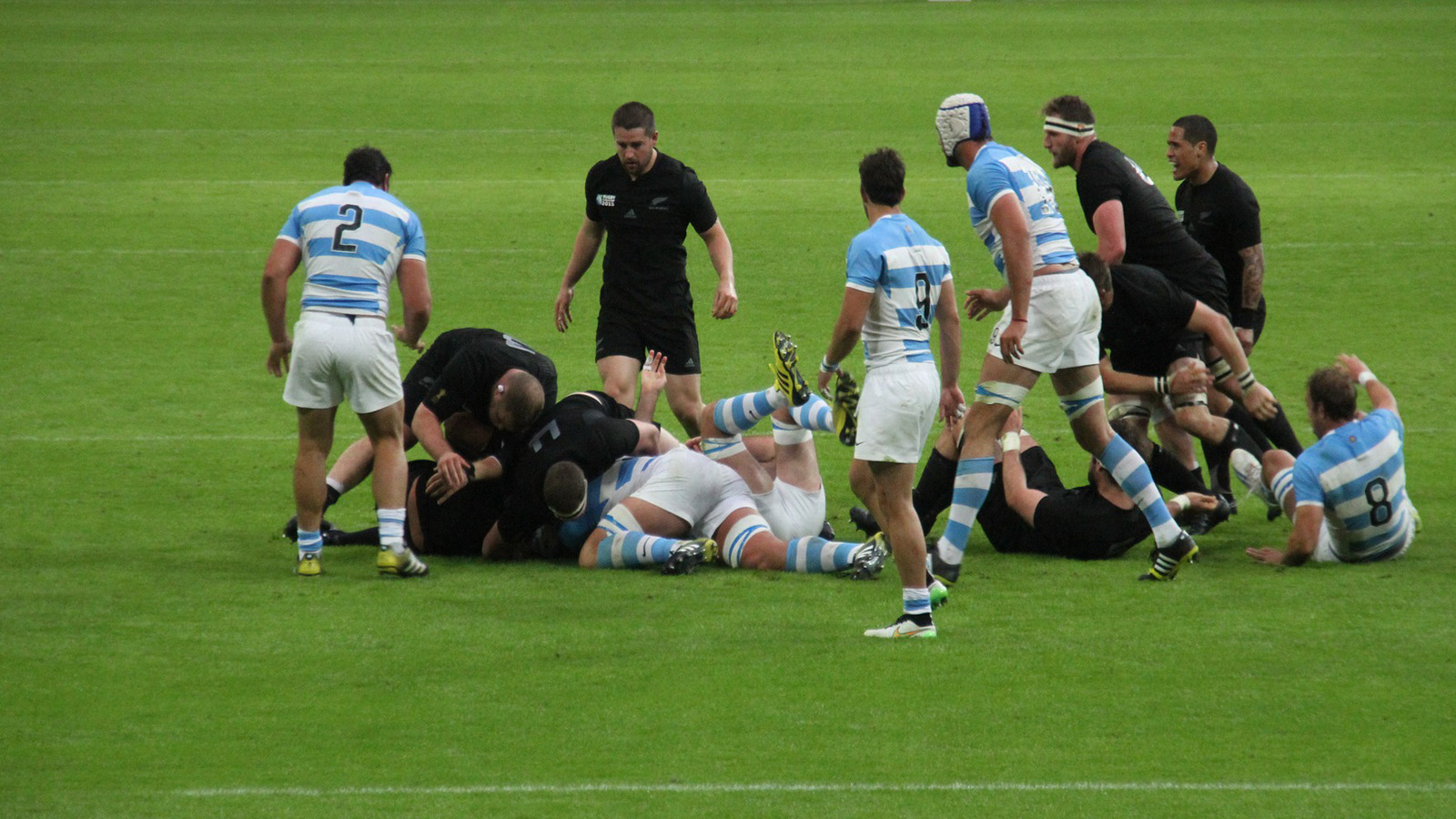
Breakdown reorganisation Rugby defenders reorganising around a breakdown during multi-phase defence
The defensive line must be rebuilt while several players remain involved in or close to the previous contact area.
Main coaching principle

Teach players to rebuild from the situation in front of them. The objective is not to reproduce a perfect diagram after every ruck, but to protect immediate threats and restore a connected defensive line before the ball is played.

1

Identify

Recognise the position and outcome of the new breakdown.

2

Recover

Leave the previous action and return to the game.

3

Protect

Cover the most immediate spaces around the ball.

4

Connect

Rebuild effective spacing between available defenders.

5

Launch

Move forward together when the next phase begins.

04
Ruck defence drill

Three-Ruck Defensive Reorganisation Drill

Mark three possible breakdown areas across the width of the pitch. The attack moves between these areas while the defenders repeatedly recover, communicate and rebuild their line before the next ball is played.

Exercise organisation

  1. Mark three possible ruck positions with cones.
  2. Begin the attack beside the central breakdown.
  3. Predetermine the direction of the first movement.
  4. Move the ball towards a new breakdown area.
  5. Require the defence to rebuild before each release.
  6. Repeat the sequence in both directions.

What the coach should observe

  • Recognition of the new breakdown.
  • Recovery from the previous contact area.
  • Protection of the closest attacking threats.
  • Communication while defenders are moving.
  • Spacing between inside and outside defenders.
  • Collective launch when the ball is played.
Progression 1 Use a predetermined direction and controlled ball speed.
Progression 2 Allow the coach to select the next breakdown area.
Progression 3 Alternate quick and slow attacking ball.
Progression 4 Add live attacking options and decision-making.

This exercise introduces the general principles. The complete organisation depends on your defensive system, player availability and the attacking threats presented around each ruck.

Read the complete ruck-defence guide →

06 · Rugby training session

How to Structure a Complete Rugby Defence Training Session

A coherent rugby defence session should progress from individual movement to realistic collective decision-making. Each exercise should develop a behaviour that players will need again during the final multi-phase game.

Example duration: approximately 65–70 minutes
Main coaching principle

Keep one shared defensive theme throughout the session. Avoid using several unrelated rugby drills that introduce different technical and tactical messages.

10 min
Stage 1

Defensive Movement and Tracking

Use a progressive warm-up involving acceleration, lateral movement, changes of direction and control of the inside space.

Coach focus Eyes up, balanced body position and short adjustment steps.
12 min
Stage 2

Tackle Approach and Contact Technique

Progress from a controlled channel into contact, focusing on foot placement, safe body height, shoulder connection and arm wrap.

Coach focus Technical quality before increasing speed or intensity.
12 min
Stage 3

Tackle, Recover and Reload

Connect the tackle with a second defensive action. Players must recover safely, scan and return to a useful defensive position.

Coach focus Complete the first action before accelerating towards the next.
15 min
Stage 4

Connected Line Speed and Rush Defence

Develop the exercise from 2v2 to 4v4, rewarding early communication, shared launch timing and consistent spacing.

Coach focus The complete line applies pressure without creating inside gaps.
18 min
Stage 5

Multi-Phase Ruck Defence Game

Finish with several attacking phases so defenders must tackle, recover, communicate and repeatedly rebuild around new breakdowns.

Coach focus Assess organisation and decisions, not only the result of each phase.

Use Scoring to Reward Defensive Behaviours

In the final game, award defensive points for the behaviours developed during the session rather than rewarding only turnovers or dominant tackles.

Connected launch The defensive line moves forward together without opening an easy gap.
Fast reorganisation Defenders rebuild a connected line before the next ball is played.
Complete defensive action The tackle, recovery and next movement are performed accurately.

Coach better defensive habits

Common Mistakes in Rugby Defence Training—and How to Correct Them

Most defensive problems are not caused by a lack of effort. They usually appear when players receive too much information, progress to pressure too quickly or practise tackling without reconnecting it to the collective defensive system.

Mistake 01

Coaching too many details at once

Long explanations reduce activity time and leave players unsure about the most important behaviour.

Coach it better: Select one main objective for each drill, such as tracking the inside shoulder, controlling the final steps or reconnecting after contact.
Mistake 02

Introducing full contact too early

If speed, space and contact intensity increase together, technique often disappears and players simply try to survive the repetition.

Coach it better: Build from controlled tracking to live decisions, then increase contact intensity only when positioning remains consistent.
Mistake 03

Judging only whether the tackle was completed

A completed tackle can still hide poor footwork, weak shoulder connection or an uncontrolled finish that creates problems at the next phase.

Coach it better: Observe the approach, body height, foot placement, contact quality and recovery—not only the final outcome.
Mistake 04

Treating line speed as an individual sprint

Fast defenders who advance at different times create soft shoulders, dog-legs and easy attacking opportunities.

Coach it better: Reward connected movement, communication and the ability to slow down under control before contact.
Mistake 05

Ending the exercise after the first tackle

Match defence continues after contact. Players must recover, scan and find their place in the next defensive line.

Coach it better: Add a reload action or a second phase so every repetition develops the habit of defending again.
Mistake 06

Separating tackling from the defensive system

Isolated technique work is valuable, but players must eventually apply those skills while making decisions alongside teammates.

Coach it better: Move from individual technique into small-unit defence, connected line speed and multi-phase conditioned games.

Keep the progression simple

Teach the movement, add a realistic decision, then connect it to the wider system. Coaches can support this progression with these rugby tackling drills before introducing more complex defensive organisation around the ruck .

From technique to team defence

Connecting Tackle Skills with the Collective Defensive System

Individual tackle technique must eventually become part of a connected defensive system. These final two rugby defence drills require players to communicate, protect space, reload after contact and defend through several phases.

Stage 1 Tackle technique
Stage 2 Small-unit connection
Stage 3 Connected line speed
Stage 4 Multi-phase defence
Defence Drill 05

Inside-Out Connection Game

Develop defensive tracking, communication and connection between neighbouring defenders.

3v3 or 4v4 12–18m channel Controlled contact

Organisation

Place attackers and defenders inside a channel. The attack can pass or carry, while defenders must advance together and protect the space between them.

Progression

Begin with touch or wrap tackles. Then allow controlled contact and give the attack more freedom to change direction or use a late pass.

Coaching focus

  • Track from the inside and avoid opening an easy return lane.
  • Keep shoulders connected while adjusting to the ball.
  • Control the final approach instead of over-running the attacker.
  • Communicate before the tackle, not after the line has already broken.
Defence Drill 06

Three-Phase Defence Challenge

Transfer tackle, reload and line-speed skills into a realistic multi-phase situation.

5v5 to 7v7 Three phases Conditioned game

Organisation

Play three consecutive phases in a marked area. After each tackle or touch, defenders must reorganise quickly before the coach releases the next ball.

Progression

Start with a predictable ball direction. Then allow the attack to play either side, vary its shape and challenge different areas of the defensive line.

Coaching focus

  • Recover from the tackle and scan before rejoining the line.
  • Identify where defensive numbers are needed most urgently.
  • Advance together without sacrificing spacing or inside protection.
  • Maintain the same communication standards across every phase.
Coach’s tip: use attacking shapes your players already recognise. Familiar pictures allow defenders to focus on their decisions rather than learning a new attack. You can create realistic scenarios from these rugby attacking systems and pod structures , while retaining separate sessions for more detailed rugby tackle technique drills .

Rugby defence coaching FAQ

Frequently Asked Questions About Rugby Defence Drills

These answers help rugby coaches adapt defensive training to the age, experience and competitive level of their players.

What are the best rugby defence drills for a training session?

An effective session should combine defensive tracking, tackle approach, controlled contact, recovery, connected line speed and multi-phase defence. The best drill is the one that develops a clearly identified behaviour and then allows players to apply it under realistic pressure.

How should a coach introduce tackling safely?

Begin with body position, footwork and controlled tracking before increasing speed or contact intensity. Change only one constraint at a time and follow the contact-training guidance of your national rugby governing body for the relevant age group and playing level.

How can a rugby team improve defensive line speed?

Develop line speed first in small groups such as 2v2 or 4v4. Players should advance together, maintain spacing, communicate and control their final steps. A connected line moving at the right moment is more effective than several defenders sprinting independently.

What is the difference between line speed and rush defence?

Line speed describes how quickly and collectively defenders advance after the ball becomes available. Rush defence is a broader tactical approach designed to reduce the attack’s time and space. It still requires connection, inside protection and the ability to adjust when the ball moves.

How should defenders reorganise after a tackle or ruck?

Players should recover quickly, scan the next attacking threat and reconnect from the inside out. The exact organisation depends on the team’s defensive system, but the priorities remain communication, balanced numbers and a connected line. This guide explains more about defending rucks effectively in rugby .

How do you progress a defence drill towards game pressure?

Start with a controlled movement pattern, add an attacking decision and then increase space, speed or contact. Finish with a conditioned game in which defenders must repeat the target behaviour across several phases without constant intervention from the coach.

Build a Defence That Can Perform Beyond the First Tackle

Strong rugby defence is created by connecting individual tackle skills with collective movement. Progress from controlled technique to realistic decisions, reward communication and reload habits, and ensure every exercise contributes to the defensive system your team wants to use on match day.