Tackle Footwork Drills: Improve the Defensive Approach
Control the Approach Before Winning the Contact
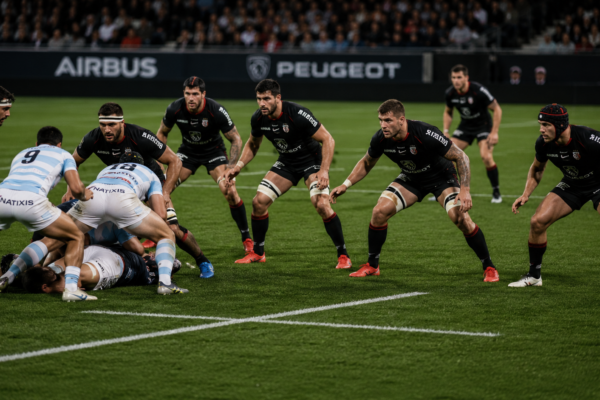
Effective tackling begins before impact. The defender must close space, control the distance to the ball carrier and prepare their feet before committing to contact.
These eight tackle footwork drills teach players to move from longer acceleration strides into shorter, faster adjustment steps. This change of rhythm allows the defender to continue moving forward while remaining balanced and capable of reacting to late footwork.
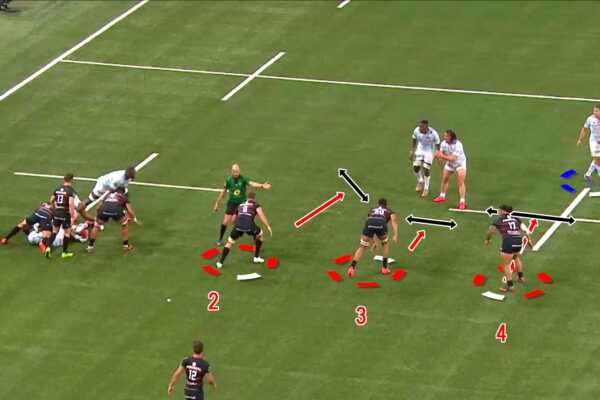
The complete defensive sequence begins with reading the direction of play and protecting the inside , continues through controlled footwork and finishes with a strong rugby tackle power step close to the ball carrier.
Footwork Frequency and Reaction Speed on the Tackle Shield
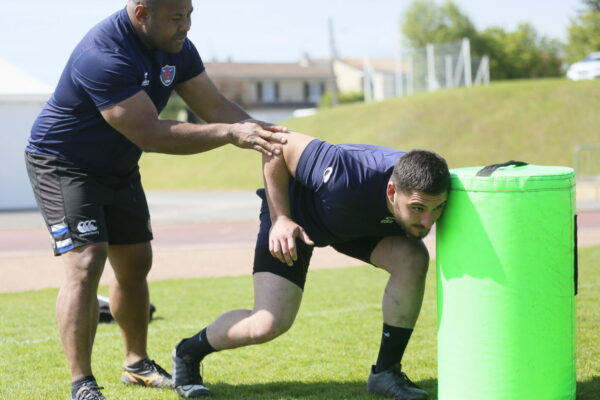
This first exercise introduces the transition between gaining ground and preparing for contact. The defender initially moves forward with enough stride length to close space before increasing their footwork frequency near the tackle shield.
Do not use the same stride throughout the approach. Gain ground first, then shorten and accelerate the steps to remain balanced and reactive immediately before contact.
Drill objectives
- Accelerate forward with body control.
- Reduce the distance to the tackle shield.
- Change from stride length to footwork frequency.
- Keep moving forward before contact.
- Prepare a strong final foot placement.
Coaching points
- Keep the chest facing the target.
- Shorten the steps as contact approaches.
- Avoid stopping in front of the shield.
- Maintain a balanced body position.
- Drive forward rather than reaching.
The final adjustment should lead into a strong foot plant close to the target. Develop this next stage with these rugby tackle power step drills .
Make the 1-3-3-1 Work
Two-Gate Reaction Drill with a Tackle Shield
This drill develops the defender’s reaction speed during the approach. The two gates create different possible running lines, forcing the player to read the signal, accelerate and adjust their footwork before contact.
React to the selected gate without losing forward momentum. Cover the initial distance quickly, then shorten the steps as the tackle shield gets closer.
Drill objectives
- React quickly to the selected running line.
- Accelerate through the correct gate.
- Gain ground during the initial approach.
- Increase footwork frequency near the target.
- Prepare the final foot placement before impact.
Coaching points
- Keep the eyes up when reading the signal.
- Turn without crossing or tangling the feet.
- Stay square to the tackle shield.
- Avoid stopping before contact.
- Drive forward from a balanced position.
Reaction speed must support the defender’s positioning. These rugby defensive tracking drills show players how to read the direction of play and protect the inside space before closing on the ball carrier.
Footwork, Sprint and Reaction-Speed Circuit
This exercise combines a movement circuit, fast footwork, acceleration and reaction speed. The defender must complete each stage before changing from high-speed movement into a controlled tackle approach.
Teach players to change rhythm without becoming static. They should accelerate when space is available, then shorten their steps and regain control as they approach the final defensive action.
Drill objectives
- Move quickly through the footwork circuit.
- Accelerate during the sprint section.
- React to the final defensive situation.
- Change from speed into controlled footwork.
- Prepare the feet before the tackle action.
Coaching points
- Maintain body control throughout the circuit.
- Use longer strides when gaining ground.
- Shorten the steps near the target.
- Keep the chest facing the defensive threat.
- Finish from a balanced body position.
This drill isolates the movement that occurs before contact. To develop the complete tackle action, combine it with these rugby tackling drills for technique and contact .
What Rugby Coaches and Directors Say
Here are a few testimonials from coaches and rugby directors who have taken our courses. Some coaches, particularly those working at higher levels, have asked not to be identified publicly.




Serge Collinet
“Extremely useful — even essential — for coaching.”
Charles is an expert who shares the knowledge and practical understanding that coaches need every day to maximise their teams’ potential and improve their ability to develop players. These resources can also evolve over time. Congratulations on this tremendous body of work and on your contribution to our game.
Name withheld at the coach’s request
A Fresh Perspective on Rugby Coaching
Up Rugby approaches attacking and defensive systems from a different angle, helping coaches understand the details that often make the difference on the pitch. Through clear explanations, video analysis and adaptable resources, each course provides practical ideas that coaches can integrate into their own game model.
Bakary Soumahoro
A very good course, clearly explained and supported by video examples. Charles is available to answer questions and provide further detail when required.
Thank you. I will definitely be back for more courses.
Valentin Caillaux
Relevant and effective content.
Working within a departmental rugby committee while also coaching in Fédérale 1, Charles’s courses have helped me continue developing as a coach and improve my understanding and analysis of the game.
Thank you again, Charles. I strongly recommend Up Rugby’s courses to coaches at every level, from professional and national divisions to regional rugby.
Adrien Renault
An excellent course.
We already had some general, experience-based ideas about attacking structures, particularly the 1-3-3-1. However, the depth and precision of the analysis enabled us to improve both our understanding and the accuracy of our approach.
The course also provides excellent tools, including video analysis and PowerPoint presentations, for both coaches and players. I highly recommend it. Well done, Charles!
Multiple Defensive Tracking Slalom Drill
This slalom drill introduces several consecutive changes of direction. Instead of completing a single straight approach, the defender must repeatedly adjust their running line while maintaining active feet and forward momentum.
Use short, frequent steps during every change of direction. The player must remain balanced and ready to react again rather than treating each movement as an isolated action.
Drill objectives
- React to several changes of direction.
- Maintain active feet throughout the slalom.
- Adjust the defensive running line repeatedly.
- Continue moving forward between each movement.
- Prepare for the next defensive action.
Coaching points
- Keep the centre of gravity controlled.
- Avoid crossing the feet when changing direction.
- Use short steps rather than large lateral movements.
- Keep the chest facing the defensive threat.
- Maintain technique as the repetitions accumulate.
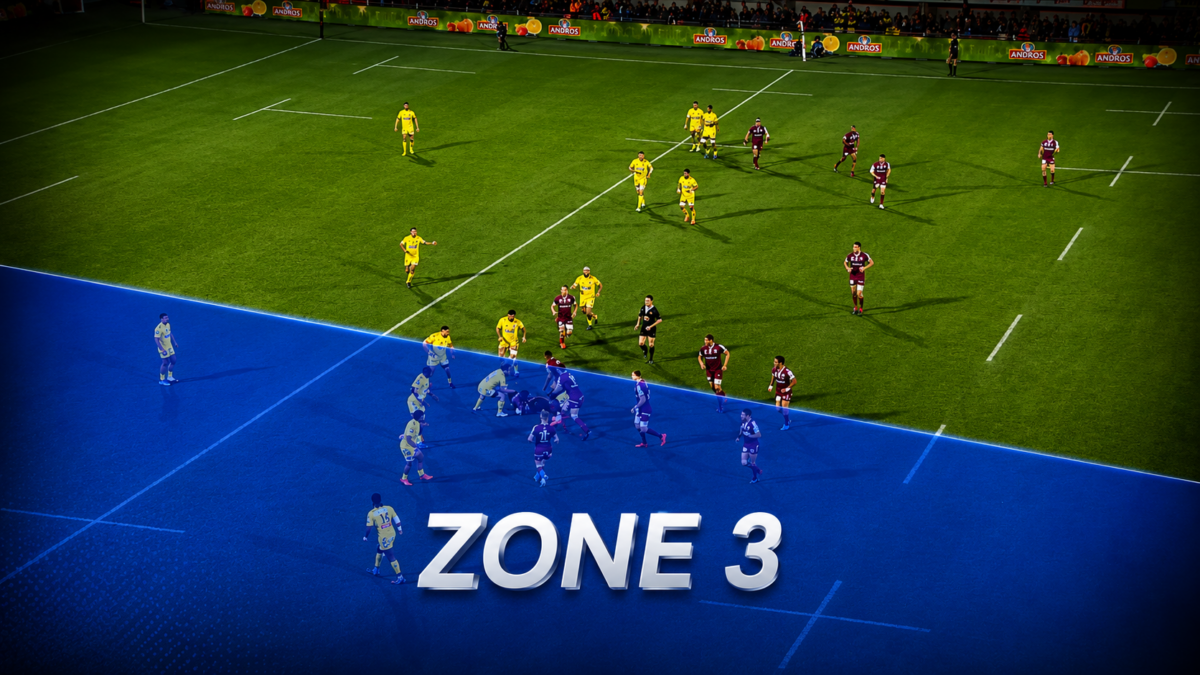
Repeated footwork must eventually support the collective defensive line. Explore our complete guide to rugby defence drills and defensive systems to connect individual movement with line speed, communication and organisation.
Build a Smarter Ruck Defence
Partner-Resisted Footwork, Sprint and Tackle Drill
This exercise combines partner-resisted footwork, acceleration and a final tackle on a cylindrical tackle bag. The resistance increases the demand on the defender’s leg movement before they transition into an explosive forward sprint.
Connect three different movement speeds: resisted footwork, acceleration and a controlled final approach. The player must regain balance after the sprint before completing the tackle.
Drill sequence
- Complete the resisted footwork section.
- Accelerate forward when released.
- Gain ground with effective sprint mechanics.
- Shorten the steps near the tackle bag.
- Finish with a controlled tackle action.
Coaching points
- Maintain leg speed against the resistance.
- Accelerate without losing body position.
- Do not arrive with long, uncontrolled strides.
- Keep the feet active before contact.
- Plant close to the target and drive forward.
After the final adjustment steps, the defender must connect their foot, hip and shoulder to create an effective collision. Continue this progression with our power step drills for stronger tackle contact .
Defensive Analysis in 1v1 and 2v2 Situations
This progression transfers footwork frequency into live 1v1 and 2v2 defensive situations. The defenders must analyse the attacking movement, close space and adjust their steps according to the information in front of them.
Footwork must respond to the attacker rather than becoming a fixed pattern. The defender gains ground while space is available, then increases their footwork frequency as the decision and contact get closer.
Drill objectives
- Analyse the attacking situation before contact.
- Close space without committing too early.
- React to the ball carrier’s movement.
- Transfer technical footwork into a live situation.
- Prepare the final tackle position.
Coaching points
- Keep the eyes up during the approach.
- Move from longer strides into shorter steps.
- Stay connected with the second defender in 2v2.
- Avoid turning the hips too early.
- Remain balanced when the attacker changes direction.
Good footwork only becomes effective when the defender also understands which space must be protected. These defensive tracking and inside-positioning drills develop the reading skills required before the tackle.
Isolated Footwork Frequency into Defensive Tracking
This drill begins with isolated footwork-frequency work before transferring the same movement into a defensive tracking situation. The first stage develops repetition, while the second gives that movement a clear rugby purpose.
Do not allow the technical footwork to disappear when the rugby situation begins. The defender must reproduce the same active feet while reading and closing down the attacker.
Drill objectives
- Develop repeated fast foot movements.
- Transfer isolated technique into defensive tracking.
- Adjust stride length during the approach.
- Remain reactive to the attacker’s movement.
- Prepare the feet for the final tackle action.
Coaching points
- Maintain quality during the isolated section.
- Move forward immediately during the transfer.
- Avoid returning to long strides near the attacker.
- Keep the chest and hips facing the threat.
- Finish balanced and ready to make contact.
Isolated footwork should always transfer into the complete defensive action. Coaches can extend this progression with these progressive rugby tackling drills focused on tackle technique and contact.
Fatigue-Based Defensive Footwork Circuit with a Swiss Ball
This final drill combines a physical circuit, work with a Swiss ball and repeated defensive tracking movements. As fatigue increases, the defender must continue to control their stride length, balance and footwork frequency.
Fatigue must not remove the technical principles developed in the previous drills. The defender still needs to gain ground, shorten the final steps and remain balanced before the defensive action.
Drill objectives
- Repeat defensive movements under fatigue.
- Maintain active feet after physical efforts.
- React to several defensive situations.
- Control the final approach despite fatigue.
- Prepare a strong foot placement before contact.
Coaching points
- Prioritise movement quality over circuit speed.
- Keep the eyes up during defensive tracking.
- Avoid uncontrolled strides as fatigue increases.
- Shorten the steps near each target.
- Stop the drill if tackle technique becomes unsafe.
The physical work adds pressure to the exercise, but it must never replace technical quality. Players should first master the defensive approach at controlled intensity before performing it under fatigue.
How to Coach Tackle Footwork
Across all eight drills, the objective remains the same: help the defender close space quickly without losing the balance and reaction speed required immediately before the tackle.
Related Rugby Coaching Resources

You may also like