
College Rugby in the USA: How Coaches Build Competitive Programs
Build a college rugby program players can understand and believe in.
College rugby in the United States is not one single environment. A coach may lead a D1A, D1AA or D2 program, a women’s team, a campus club or a developing side rebuilding from the ground up. The day-to-day challenge, however, is remarkably similar: create a clear rugby identity while players arrive with different levels of experience, availability and understanding of the game.
Strong programs do not begin by copying a professional team’s shape. They begin by deciding what their own players need to recognize, how the team will defend, where it wants to create momentum and how those ideas will be taught every week. Before building that program, make sure the coaching staff is properly prepared through the USA Rugby coaching certification pathway.
See the game faster
Recognize whether a problem is technical, tactical or collective before planning the next practice.
Plan with more purpose
Connect each activity to a real match problem instead of collecting drills with no common thread.
Teach players more clearly
Create shared language and give players visual references they can understand before they step onto the field.
This is where structured coach education can save a college staff meaningful time. Up Rugby Academy courses are built from hundreds of hours of match analysis and organize tactical concepts into clear coaching frameworks. Rather than spending evenings trying to connect isolated clips, drills and notes, coaches can work from a logical progression and use ready-to-present PowerPoint materials to help players understand the system more quickly. The result is not a shortcut around coaching; it is more time spent on observation, feedback and player development.




Understand your competitive environment before you build the season
College rugby is not governed by one identical schedule, one playoff route or one set of conference expectations. A coach needs to understand the environment in which the team actually competes before deciding how to manage player workload, contact exposure, travel, selection and practice priorities.

Within the USA Rugby-aligned College Rugby Association of America structure, the current men’s competition includes D1A, D1AA and D2. The women’s college game includes D1A, D1 and D2 pathways. Conferences, eligibility rules and postseason qualification procedures shape the calendar around those divisions.
The practical implication for a college coach is simple: do not borrow assumptions from another program. A team’s match window, travel demands, player availability and route into postseason competition can be very different from those of a program in another conference or division.
D1A · D1AA · D2
D1A · D1 · D2
XVs and Sevens
Conference first, then postseason
Four foundations that make a college rugby program more competitive
The level of opposition may change, but competitive teams consistently develop the same foundations. A clear model helps the coach decide what belongs in practice and helps players understand how their individual contribution fits the team.
Safe contact habits
Players need a progressive and repeatable approach to tackling, body position and contact decisions.
Connected defense
Defenders must understand line spacing, inside support, reloads and their responsibilities near the breakdown.
Clear attacking roles
Players should know where to work, when to support and how to create momentum without waiting for a scripted play.
Shared game language
The squad needs simple terms that allow coaches and players to identify the same problem under match pressure.

Use the field for what only the field can teach
College coaches rarely run out of ideas. They run out of time together. The challenge is not to fit more drills into a practice; it is to make every minute on the field more purposeful.
Players do not need to discover every tactical concept for the first time while standing beside cones. If they already understand the objective, the vocabulary and the picture of the situation, practice can focus on movement, communication, decision-making and feedback.
This matters especially when a squad includes both experienced rugby players and athletes still learning the game. A clear visual explanation gives everyone the same starting point before the intensity of the field session begins.
Prepare, apply, review
This is not a rigid college rugby practice plan. It is a simple framework that helps a coaching staff create continuity from one contact point to the next.
Prepare the picture
Use a short meeting, video clip or PowerPoint slide to explain the match problem and the behavior the team wants to develop.
Apply it on the field
Build practice activities that let players experience the relevant movement and decision, whether that is connected defense or an attacking shape.
Review the transfer
After practice or a match, revisit the original objective. Did the players recognize the situation and respond with the agreed team rule?
What a coach gains from this approach
- Faster diagnosis: identify the real reason a phase failed before choosing the next activity.
- Better practice design: connect technical work, unit work and team play instead of treating them as separate topics.
- Clearer player communication: use the same images and words in meetings, on the field and during match review.
- More transferable learning: help players understand not only what to do, but when and why to do it.
College rugby coaching · Build the foundations
Build the defense first — then give attack a shape players can own
A college rugby program does not need a long playbook to become difficult to beat. It needs a few non-negotiables that players can recognize, communicate and repeat when the game becomes fast, physical and noisy.

A defense players can repeat under pressure
For many college rugby coaches, defense is the best starting point because it creates standards immediately. The aim is not simply bigger hits. It is a connected line that tracks together, communicates early, makes reliable tackles and understands what happens after contact.
- Approach with balance and control before the tackle.
- Keep inside and outside defenders connected.
- Give the first arriving players a clear post-tackle and ruck responsibility.
The tackle should be coached as a progression, not as an isolated collision. Start with tracking and body position, then build toward decision-making and support. These rugby tackling drills, this guide to tackle footwork and defensive approach, and the principles of defending rucks effectively help turn that sequence into a coherent defensive practice.
Give attack a simple, recognizable structure
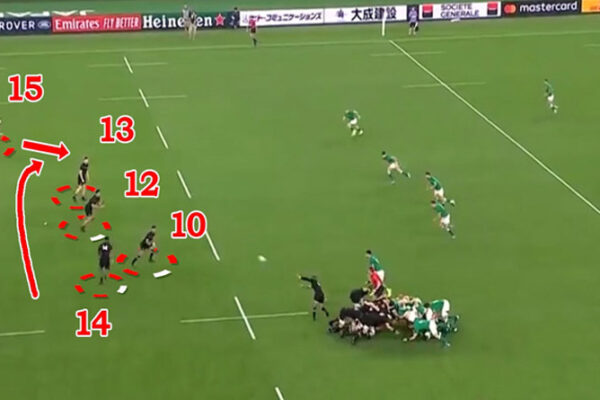
Once players can defend with confidence, attack becomes easier to teach. A coach’s job is not to copy a professional team’s system; it is to give each player a useful picture of where the next option is likely to be. That might include a clear first-receiver role, workable pod spacing, support on the edge and a shared reaction after every ruck.
A 1-3-3-1 attacking structure can be an effective framework for a college team when it is taught progressively. Players must understand the purpose behind the numbers: how the structure creates options, how a pod distributes the ball, and how the team reloads after a phase. The details of pod distribution matter because they connect the structure to real decisions on the field.
The long-term coaching view
A competitive college program is built in layers
The strongest college rugby teams are rarely the teams with the most ideas. They are the teams whose players understand the same few ideas well enough to use them without waiting for the coach’s instruction.

Set the game model
Choose the principles that suit your players before adding detail or complexity.
Create shared language
Make roles and decisions clear enough that every player can explain them back.
Expose the system
Let players solve increasingly realistic problems under pressure and fatigue.
Adjust with evidence
Use match clips and simple questions to improve the next practice, not just explain the last game.
Develop the coach as carefully as the team
For a rugby coach in the USA, the challenge is often not finding another drill online. It is knowing where that drill belongs in a learning progression, what to observe during it, and how it connects to the team’s defensive system or attacking structure.
That is where structured education makes a genuine difference. Courses built from hundreds of hours of match analysis, supported by ready-to-present PowerPoint resources, help turn isolated ideas into a teachable framework. They do not replace the coach’s judgment; they give that judgment a faster, clearer foundation. The time saved can then be invested where it matters: observing players, refining feedback and adapting the plan to the group in front of you.
Start with a safe and clear coaching base through this guide to rugby coach certification in the USA, then build a game model that your players can recognize in both attack and defense. That is how a college rugby program becomes more connected from one practice to the next.