1-3-3-1 Rugby Pod Distribution
Organise the Shape Early so Players Can Read the Defence
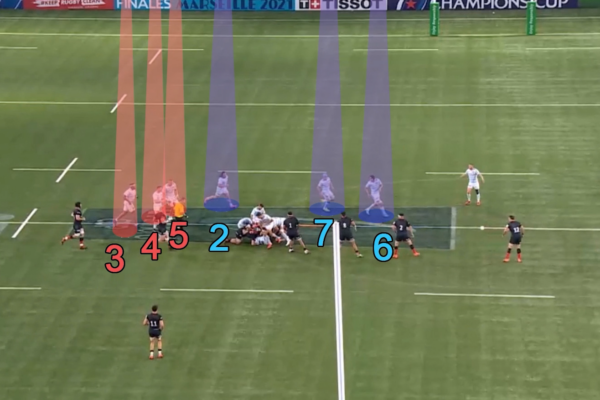
The 1-3-3-1 is often presented as a simple distribution of eight forwards: two central pods of three and one forward on each edge. For coaches, the real challenge is helping players rebuild that shape from scrums, lineouts, kick receipts and disorganised phases.
Effective 1-3-3-1 pod distribution gives players clear reference points before the ball arrives. Forwards can then spend less time searching for a position and more time scanning the defensive line, communicating and selecting the most effective attacking option.
This distribution should connect with the principles explained in our guide to rugby attacking systems, pods, shape and defence and the continuous reorganisation developed through 1-3-3-1 rugby pod rotation .
A pod should provide carrying, passing and support solutions rather than force the team to repeat the same predetermined movement.
Coaches can connect this attacking work with rugby defence drills and defensive systems to teach both sides of the contest.
Master the 1-3-3-1 Rugby Attacking System
What Does Distribution Mean in the 1-3-3-1?
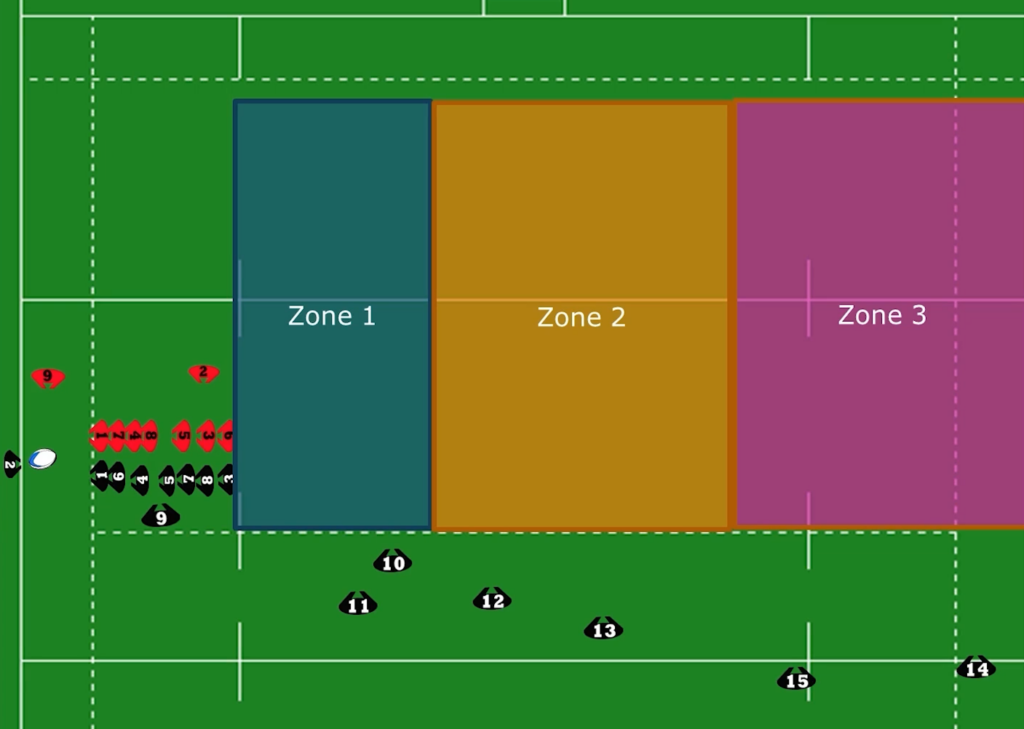
Distribution describes how players occupy the width and depth of the pitch and how they move into their next attacking roles after a set piece or breakdown. In the 1-3-3-1, the forwards are organised around two central pods and two wider positions.
The objective is not to reproduce a perfect static diagram. The team must maintain enough organisation to threaten the full width while remaining capable of adapting to the defensive picture.
The structure provides
- Width on both sides of the pitch.
- Two connected central forward groups.
- Several carrying and passing options.
- Reference points after each breakdown.
- Connections between forwards and backs.
The players must read
- The location and speed of the previous ruck.
- The defenders available on each side.
- The speed and connection of the defensive line.
- The space available in wider channels.
- The most favourable attacking match-up.
Compare the 1-3-3-1 with other rugby attacking structures, including the 2-4-2 and pod systems to understand how different shapes organise width and forward connections.
Why Pod Distribution Should Begin from Set Piece
Scrums, lineouts and kick receipts provide controlled starting pictures. Players know where the phase begins, which teammates are initially occupied and which areas of the pitch are available.
Begin with predictable starting points so players can understand their movements and responsibilities before introducing the uncertainty of open play.
Start with clarity
- Assign clear roles after the set piece.
- Establish the intended width and spacing.
- Identify the likely location of the first ruck.
- Repeat the initial distribution accurately.
- Correct unnecessary or duplicated movements.
Then add uncertainty
- Change the location of the scrum or lineout.
- Vary the direction of the attacking launch.
- Move the position of the first breakdown.
- Change which players secure the ruck.
- Ask the forwards to rebuild the same balance.
Once the initial distribution is understood, players must learn to reload as the ball moves across the pitch. Our guide to rugby pod rotation in the 1-3-3-1 explains how forwards reorganise without creating unnecessary movement.
Make the 1-3-3-1 Work
How Good Distribution Gives Forwards More Time
Time in attack is not created only by moving the ball quickly. It is also created by reducing hesitation. When forwards understand their likely destination and responsibility, they can prepare their decision before receiving the ball.
The system should answer “Where do I need to be?” early enough for the player to focus on the more important question: “What is the defence giving us?”
Before receiving the ball
- Reach the attacking position early.
- Communicate with the scrum-half and playmakers.
- Adjust depth and spacing inside the pod.
- Identify the likely ball carrier and support roles.
- Prepare the next breakdown connection.
Scan the defensive picture
- Count the defenders on each side of the ruck.
- Identify gaps or disconnected defenders.
- Observe the speed of the defensive fold.
- Recognise favourable shoulder match-ups.
- Decide whether to carry, pass or play behind.
Coaches should also teach players how the opposition is trying to control these attacking options. Our rugby defence drills and defensive systems guide explains how defenders organise, connect and protect space around the breakdown.
Rugby Pods Are Reference Points, Not Fixed Moves
A rugby pod should not be coached as a fixed triangle that always performs the same action. It is a connected group of players capable of presenting several attacking solutions around the ball.
The 1-3-3-1 provides locations from which players can make decisions. It should organise the attack without predetermining the same decision on every phase.
First build the organisation
- Reach useful attacking positions consistently.
- Maintain effective width and depth.
- Create clear connections inside each pod.
- Connect forwards with the playmaker behind.
- Provide support for the next breakdown.
Then develop adaptation
- Carry when the defensive match-up is favourable.
- Transfer the ball within the pod.
- Play behind to a second-line playmaker.
- Move the ball beyond the pod.
- Change the point of attack when required.
Pod decisions depend on the defenders positioned in front of the attack. Explore how attacking shape and defensive organisation interact in our guide to rugby attacking systems, pods, shape and defence .
What Rugby Coaches and Directors Say
Here are a few testimonials from coaches and rugby directors who have taken our courses. Some coaches, particularly those working at higher levels, have asked not to be identified publicly.




Serge Collinet
“Extremely useful — even essential — for coaching.”
Charles is an expert who shares the knowledge and practical understanding that coaches need every day to maximise their teams’ potential and improve their ability to develop players. These resources can also evolve over time. Congratulations on this tremendous body of work and on your contribution to our game.
Name withheld at the coach’s request
A Fresh Perspective on Rugby Coaching
Up Rugby approaches attacking and defensive systems from a different angle, helping coaches understand the details that often make the difference on the pitch. Through clear explanations, video analysis and adaptable resources, each course provides practical ideas that coaches can integrate into their own game model.
Bakary Soumahoro
A very good course, clearly explained and supported by video examples. Charles is available to answer questions and provide further detail when required.
Thank you. I will definitely be back for more courses.
Valentin Caillaux
Relevant and effective content.
Working within a departmental rugby committee while also coaching in Fédérale 1, Charles’s courses have helped me continue developing as a coach and improve my understanding and analysis of the game.
Thank you again, Charles. I strongly recommend Up Rugby’s courses to coaches at every level, from professional and national divisions to regional rugby.
Adrien Renault
An excellent course.
We already had some general, experience-based ideas about attacking structures, particularly the 1-3-3-1. However, the depth and precision of the analysis enabled us to improve both our understanding and the accuracy of our approach.
The course also provides excellent tools, including video analysis and PowerPoint presentations, for both coaches and players. I highly recommend it. Well done, Charles!
Adapting Pod Distribution from Scrums and Lineouts
Scrums and lineouts create different starting pictures. The forwards are not positioned in the same areas, do not become available at the same time and may have different distances to cover before the first breakdown.
Do not copy the same distribution from every set piece. Adapt the initial movements to the location of the restart, the attacking launch and the expected position of the first ruck.
Distribution from a scrum
- Eight forwards begin in one concentrated area.
- The attacking launch determines the first support roles.
- The scrum position changes the available width.
- Players must reload into central and edge positions.
- The team must rebuild connections after the first ruck.
Distribution from a lineout
- Jumpers, lifters and the thrower become available differently.
- The first attacking zone determines the support routes.
- Enough players must secure the first breakdown.
- Too many players near the ball will remove attacking width.
- The next phase should recreate a balanced shape.
The position and quality of the first breakdown influence both the attacking reload and the defensive response. Coaches can study the other side of this contest in our guide to defending rucks effectively in modern rugby .
Automatic Distribution Should Create Better Decisions
Repeating the basic distribution does not make the attack rigid. When players can reach useful positions without constant instructions, they have more attention available to scan, communicate and react to the defence.
Automate the movement required to rebuild the shape, but leave the final attacking decision open. The structure should support player decisions rather than replace them.
What can become automatic?
- Rebuilding width after a breakdown.
- Reloading into central and edge positions.
- Maintaining spacing between pod members.
- Creating connections with the playmaker.
- Communicating the available attacking roles.
What must remain adaptable?
- The selected ball carrier.
- The running and passing option.
- The decision to play behind the pod.
- The direction of the next phase.
- The response to defensive numbers and line speed.
The long-term objective is not for every player number to stand in one fixed position. Players should understand the needs of the attacking shape and fill the most useful role available during that phase.
Build a Smarter Ruck Defence
Adapt the 1-3-3-1 to Your Players
A successful attacking system must reflect the abilities of the squad using it. The objective is not to reproduce a professional team’s movements exactly, but to create a structure that allows your players to use their strongest qualities.
Keep the overall attacking balance, but adapt the roles, movements and responsibilities to the mobility, skill level and decision-making ability of your players.
Analyse your forwards
- Mobility and repeat-effort capacity.
- Carrying power close to the gain line.
- Passing ability under defensive pressure.
- Decision-making inside and behind the pod.
- Confidence when operating in wider channels.
Adapt the framework
- Place complementary profiles inside each pod.
- Use mobile forwards in appropriate wider roles.
- Adjust the number of players securing the ruck.
- Match the complexity to the available training time.
- Develop the system as the players improve.
The best system is not the one copied most accurately. It is the one that creates clear reference points while helping your players recognise and exploit the defensive problems in front of them.
Why Attack and Defence Must Be Coached Together
An attacking structure only becomes effective when players understand the defensive picture in front of it. Pod distribution creates several threats, while the defence attempts to protect the ruck area, maintain connection and control the available space.
Do not assess the attacking option in isolation. Players should understand which defensive behaviour the shape is designed to expose and how the defence may respond.
What the attack should identify
- The number of defenders on each side of the ruck.
- Disconnected or late defenders.
- The speed and direction of the defensive fold.
- Weak shoulders and favourable match-ups.
- Space behind or beyond the first defensive line.
What the defence is trying to protect
- The immediate spaces around the breakdown.
- The connection between inside and outside defenders.
- The gain line against central forward carries.
- The passing option behind the pod.
- The wider channels and backfield space.
To coach the defensive side of these situations, explore our complete rugby defence drills guide , our exercises for defensive tracking and inside positioning and our analysis of defensive organisation around the ruck .
How to Train 1-3-3-1 Pod Distribution
Pod distribution should progress from clarity to uncertainty. Players first learn how to rebuild the attacking shape, then apply the same principles against changing defensive pictures.
Each exercise should have a clear tactical purpose. Do not turn pod distribution into a conditioning circuit in which players run without scanning, communicating or understanding their role.
When players can rebuild the initial distribution, introduce the movements required to maintain it across several phases through these principles of rugby pod rotation in the 1-3-3-1 attacking shape .

You may also like
Rugby Attacking Systems: Pods, Shape and Defence
Rugby Attacking Structures: 1-3-3-1, 2-4-2 & Pods