7 Rugby Tackling Drills to Improve Defence Skills and Tackle Technique
Develop Safer, Stronger and More Complete Tacklers
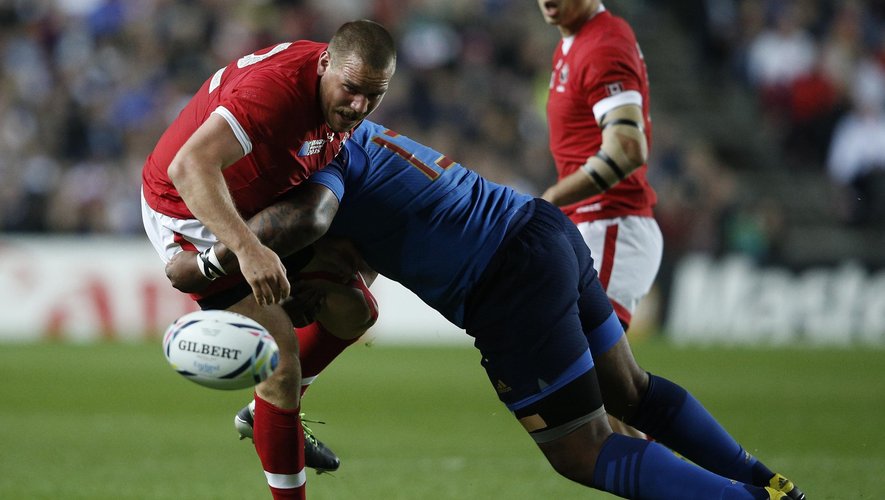
Effective tackling requires more than physical commitment. A defender must control the approach, connect accurately with the shoulder, wrap the arms, continue driving the legs and complete the action safely.
These seven progressive rugby tackling drills help coaches develop individual contact technique, two-player tackles, ball control, arm placement and the ability to react after the initial defensive action.
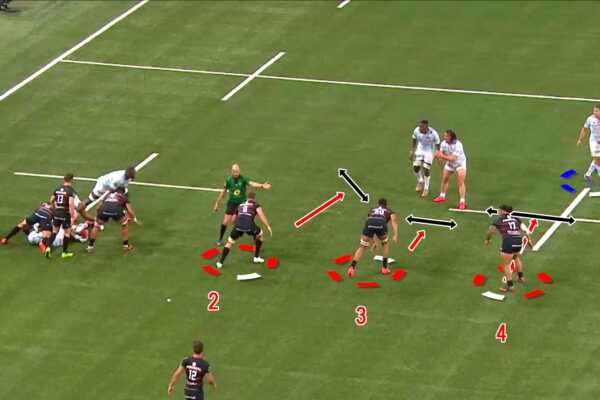
Before introducing stronger contact, players should learn to read the direction of play and protect the inside , control their defensive approach footwork and place an effective power step before contact .
One Defender on the Ball, One Defender on the Legs
This two-player tackling drill develops coordination between defenders during a double tackle. The first tackler controls the upper body and the ball, while the second defender targets the legs to stop the carrier’s momentum.
Give each tackler a clear and complementary responsibility. Both defenders should avoid arriving at the same height or attacking exactly the same target.
Drill objectives
- Coordinate two defenders in the tackle.
- Control the ball carrier’s upper body.
- Stop the carrier’s leg drive.
- Reduce the possibility of an offload.
- Complete the tackle together.
Coaching points
- Communicate before and during contact.
- Assign the high and low roles clearly.
- Keep the head safely away from impact.
- Wrap the arms around the correct target.
- Continue working after the first connection.
A coordinated double tackle can slow the attacking ball and give the defensive line more time to reorganise. Discover how this contact outcome connects with defensive organisation around the ruck .
Build a Complete Defensive Ruck System
Jaguares Two-Player Tackling Skills Drill
Inspired by a Jaguares training exercise, this drill develops the technical coordination required when two defenders tackle the same ball carrier. Each defender must contribute a different action to control and complete the tackle.
The second defender should add control, stopping power or pressure on the ball. They must not simply reproduce the same action or attack the same space as the first tackler.
Drill objectives
- Coordinate the first and second tacklers.
- Develop strong arm connection.
- Control the ball carrier’s upper body.
- Prevent the attacker from offloading.
- Complete the defensive action together.
Coaching points
- The first defender must connect decisively.
- The second defender should identify the free space.
- Maintain active arms throughout the contact.
- Avoid attacking the same height and target.
- Communicate until the tackle is complete.
Before the first defender can dominate the initial collision, they must arrive with a strong final foot placement. Use these rugby tackle power step drills to connect the foot, hip and shoulder before contact.
Defending the Ball with Two Tacklers
This drill focuses on controlling both the ball carrier and the ball during a double tackle. The two defenders work together to stop forward momentum, prevent an offload and reduce the quality of the attacking team’s next possession.
Do not judge the tackle only by whether the ball carrier goes to ground. The defenders should also influence the ball, the speed of its presentation and the organisation of the following breakdown.
Drill objectives
- Control the ball carrier’s upper body.
- Apply legal pressure around the ball.
- Prevent or disrupt the offload.
- Slow the attacking ball after contact.
- Create time for the defence to reorganise.
Coaching points
- The first defender controls the carrier’s movement.
- The second defender identifies the ball position.
- Keep the arms connected throughout contact.
- Continue driving from a balanced position.
- Release the tackled player when legally required.
The outcome of the tackle directly affects the speed of the next phase. Our guide to rugby defence drills and defensive systems explains how individual contact skills support collective defensive organisation.
Arm Placement and Footwork for Upper-Body Tackle Control
This exercise develops control of the ball carrier’s upper body while maintaining accurate arm placement and a stable foot position. The defender must connect their feet, body shape and arms into one coordinated tackling action.
Avoid relying only on upper-body strength. Effective control begins with balanced foot placement before the arms connect rapidly around the ball carrier.
Drill objectives
- Control the ball carrier’s upper body.
- Develop accurate arm placement.
- Maintain a strong and balanced foot position.
- Coordinate the feet, body and arms.
- Remain stable throughout the contact.
Coaching points
- Arrive with active and controlled feet.
- Maintain an effective body height.
- Connect the arms quickly after contact.
- Keep the elbows close to the body.
- Continue driving rather than becoming static.
Strong arm placement depends on the quality of the approach. These tackle footwork drills for the defensive approach help players arrive balanced and reactive before making contact.
Argentina Dynamic Defence Drill: Tackle and Double Action
This dynamic drill develops the defender’s ability to link two consecutive defensive actions. After completing the first tackle, the player must react, reorganise and become immediately available for the next defensive task.
The defender’s involvement does not finish with the first contact. Complete the tackle correctly, recover a balanced position and identify the next attacking threat as quickly as possible.
Drill objectives
- Complete two consecutive defensive actions.
- React quickly after the first tackle.
- Recover a balanced defensive position.
- Maintain concentration throughout the sequence.
- Develop defensive work rate.
Coaching points
- Finish the first action before moving again.
- Return to the feet without unnecessary delay.
- Keep the eyes on the next attacking threat.
- Regain balance before the second intervention.
- Do not sacrifice technique for speed.
In a match, this second action often involves rebuilding beside the next breakdown. Learn how defenders recover, communicate and redistribute themselves in our guide to defending rucks effectively in modern rugby .
Resistance-Band Drill for Tackle Arm Position
This technical drill uses a resistance band around the player’s hands and back. The constraint helps the defender feel a compact arm position while preparing to connect and wrap during the tackle.
Keep the elbows close to the body before contact. The band provides immediate feedback when the arms move too far away or extend too early.
Drill objectives
- Develop a compact arm position.
- Keep the elbows close to the ribs.
- Coordinate the hands, elbows and upper body.
- Improve awareness before contact.
- Prepare a faster arm wrap.
Coaching points
- Perform the movement slowly at first.
- Avoid extending the arms before impact.
- Maintain a stable upper-body position.
- Do not let the band pull the shoulders backwards.
- Prioritise movement quality over resistance.
Once the player understands the required arm position, remove the band and transfer the movement into a controlled tackle against a shield. The constraint is a teaching tool, not a substitute for the complete tackle action.
Committing into Contact with a Tackle Shield
This final drill focuses on controlled commitment into contact. The defender moves forward, prepares their body position and drives through a tackle shield before progressing to a rapid arm wrap around a tackle tube.
Commitment does not mean creating an uncontrolled collision. Power should come from balanced foot placement, coordinated forward movement and an immediate arm connection.
Drill objectives
- Develop confidence entering contact.
- Connect the approach with the impact.
- Maintain a strong body position.
- Continue moving through the shield.
- Combine impact with a fast arm wrap.
Coaching points
- Move forward instead of waiting for contact.
- Keep the feet active during the approach.
- Maintain safe head and shoulder placement.
- Stay balanced after the initial impact.
- Adapt the intensity to the players’ experience.
The final step before contact should place the defender in a position to drive through the target. These rugby tackle power step exercises develop the same-foot, same-shoulder connection required for a stronger impact.
Build the Complete Tackle, Not Just the Impact
Strong tackle technique comes from connecting every stage of the defensive action. Coaches should develop these skills progressively before increasing speed, pressure and contact intensity.
Related Rugby Coaching Resources

You may also like
Tackle Footwork Drills: Improve the Defensive Approach