Rugby Attacking Systems: Pods, Shape and Defence
Build an Attacking System Your Players Can Understand, Train and Adapt
A rugby attacking system should give players clear reference points without removing their ability to scan, communicate and make decisions. This guide connects pods, spacing, phase-play structure, defensive reading and practical rugby training.
Whether you coach youth, school, college, community or performance rugby, an effective attacking framework must do more than place players into a formation. It should help the team preserve width, create several credible options and recognise where the defence is most vulnerable.
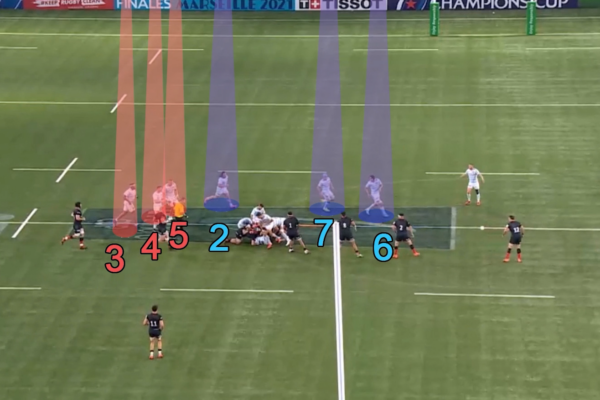
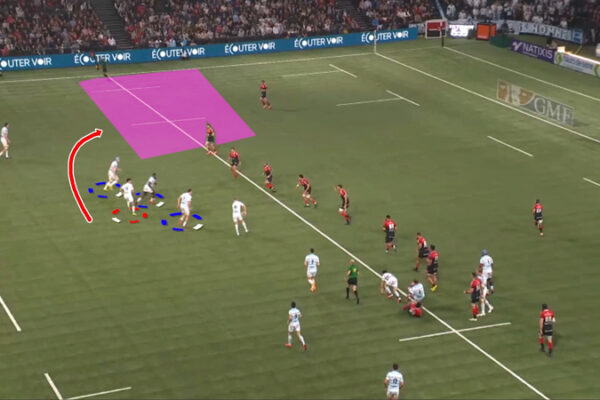
Systems such as the 1-3-3-1, 2-4-2 and 1-3-2-2 provide different ways of distributing forwards across the pitch. Our guide to rugby attacking structures compares these shapes, while our article on 1-3-3-1 rugby pod distribution explains how players organise themselves from set pieces and breakdowns.
This article focuses on the coach’s challenge: turning tactical ideas into a practical game model and developing that model through progressive rugby drills, realistic defensive pressure and decision-making exercises.
What Is a Rugby Attacking System?
A rugby attacking system is a shared framework that helps players organise themselves across the pitch and reconnect after a scrum, lineout, ruck, kick receipt or turnover. It gives the team enough structure to attack repeatedly without forcing every phase to follow the same pattern.
A useful attacking system should answer several simple questions before the ball arrives: where should players move, how should forwards and backs connect, which areas of the pitch must remain occupied and what options should be available to the first receiver?
Organise the full width
Players occupy useful positions across the field instead of gathering around the previous breakdown.
Create several options
The ball carrier, support players, forwards and playmakers offer different solutions from the same attacking picture.
Reduce hesitation
Clear reference points allow players to arrive earlier, scan the defence and prepare their decisions before receiving the ball.
Maintain continuity
The team can rebuild its shape after quick ball, slow ball, contact, a line break or an unexpected change in the point of attack.
A system is not a pre-planned move
A strike play normally prepares a specific sequence from a controlled starting point. An attacking system must continue working after that initial sequence has ended and the game becomes less predictable.
Numbers such as 1-3-3-1, 2-4-2 or 1-3-2-2 mainly describe the broad distribution of the forwards. They do not, by themselves, define the running lines of the backs, the kicking strategy, the breakdown policy or the team’s decisions in transition. These elements must be connected within a complete rugby game model.
Coaching connection: attacking decisions become more realistic when defenders present connected and varied pictures. Use our rugby defence drills and defensive systems guide to introduce realistic defensive pressure into your rugby training sessions.
Make the 1-3-3-1 Work
Building a Complete Rugby Game Model
An attacking formation is only one part of a rugby game model. A complete model connects attack, defence, kicking, set piece, breakdown strategy and transitions through a small number of shared principles that players can recognise during training and matches.
The purpose of a game model is not to create a complicated playbook. It is to translate the coach’s intentions into clear and observable behaviours that can be developed through rugby drills, training exercises and realistic game situations.
Attacking principles
Define how the team maintains width, creates forward momentum, connects forwards and backs and rebuilds its shape after each breakdown. This includes the principles behind rugby pod rotation and player realignment .
Defensive organisation
Establish how defenders reorganise, communicate, control line speed and protect space around the breakdown. The organisation must adapt to the different defensive structures around the ruck .
Possession and continuity
Decide how many players should support the carrier, how the team protects quick possession and how players react when the ball becomes slow or the original attacking shape breaks down.
Kicking strategy
Connect the kicking game with field position, pressure, backfield space and the quality of possession. Carrying, passing and kicking should support the same collective objectives.
Scrum and lineout launches
Use set pieces to create a controlled starting picture, then connect the launch play with the shape required for the following phases.
Reacting to changes of possession
Players need common reference points after turnovers, kick receipts and line breaks, when the pitch is less organised and opportunities can appear quickly.
Turn the game model into rugby training
Every rugby coaching session should connect at least one technical objective with one collective principle from the team’s game model.
A rugby drill should not be selected simply because it looks active or produces a lot of movement. The coach must know which match behaviour the exercise is designed to improve and which decisions the players are expected to make.
Build a Smarter Ruck Defence
How Rugby Pods Organise the Attacking Shape
A rugby pod is a small group of forwards working together around the ball. Its purpose is not simply to provide one carrier and two players waiting to clean the ruck. A well-organised pod creates several credible attacking options while preparing the support required after contact.
Pods give forwards clear reference points within an attacking system. However, their effectiveness depends on spacing, depth, timing, communication and the ability of every player to read the defensive line.
Direct carry
A forward attacks the gain line with connected support available to secure possession or continue the movement.
Short passing option
A tip-on or short pass can change the point of contact and attack a weaker shoulder in the defensive line.
Play behind the pod
A pull-back pass connects the forwards with a fly-half or another playmaker positioned behind the initial attacking threat.
Support and continuity
Players adjust their running lines to support a line break, secure the next breakdown or reload into the following attacking shape.
The pod must provide
- A credible ball-carrying threat
- Accurate depth and spacing
- Early communication
- Passing options before contact
- Immediate support after the action
The players must read
- Defensive numbers around the ruck
- Line speed and defender connection
- Strong and weak shoulders
- The speed of the previous breakdown
- Space behind or outside the defensive line
Coaching rugby pods without creating robots
During rugby training, the coach should avoid repeating pod movements against an empty defensive line for too long. Unopposed repetition can establish positions and running lines, but players must quickly progress towards rugby drills that include defenders, changing numbers and different breakdown speeds.
The objective is for players to understand why they are occupying a position and which option the defensive picture makes available. The pod provides the structure; the defence determines the final decision.
Learn how forwards reach their starting positions in our guide to 1-3-3-1 rugby pod distribution , then discover how they reorganise across multiple phases through rugby pod rotation and attacking shape .
Teaching Rugby Players to Read the Defence
An attacking system only becomes effective when players can recognise what the defence is giving them. The structure places attackers in useful positions, but the final choice must depend on defensive numbers, spacing, movement and the speed of possession.
Rugby coaches should therefore connect attacking drills with defensive reading. Players need repeated opportunities to scan before receiving the ball, communicate what they see and adapt their decision when the defensive picture changes.
Count defenders on each side
Identify where the defence has more or fewer players and whether the attack can create a numerical advantage.
Observe defensive spacing
Look for gaps, disconnected defenders or players who are late recovering from the previous breakdown.
Assess defensive line speed
A fast defensive launch may require greater depth, a short passing option, a change of direction or a kick into the space behind.
Read the closest defenders
The positioning of the defenders beside the ruck influences whether the attack should carry close, play behind a pod or move the ball away.
Identify favourable shoulders
Players should recognise defenders who are turning, isolated, recovering or presenting a weaker shoulder to the ball carrier.
Scan the space behind the line
Backfield positioning can reveal opportunities for attacking kicks, kick passes or a 50:22, particularly when defenders are committed close to the line.
A simple decision-making sequence for rugby training
Turn defensive reading into a rugby coaching exercise
Begin with one attacking pod, a playmaker and a small defensive group. Before each repetition, change one element of the defensive picture. The attackers must identify the change and select an appropriate solution rather than repeat the same movement.
- Change the number of defenders beside the breakdown.
- Vary defensive line speed between repetitions.
- Ask one defender to begin slightly disconnected.
- Change the position of the backfield defender.
- Alternate quick and slow attacking possession.
The coach should evaluate the information used by the players, not only whether the attack crossed the gain line. A positive outcome can come from a poor decision, while a correct decision may still be affected by inaccurate passing, timing or execution.
Use our complete guide to rugby defence drills and defensive systems to organise realistic opposition, then develop the individual approach through these rugby tackle footwork drills .
How to Coach a Rugby Attacking System
Rugby coaches should introduce an attacking system progressively. Players first need to understand the purpose of the structure before applying it against changing defensive pictures and match pressure.
Explain the principles
Establish shared language for width, depth, pods, support and player movement.
Build the starting shape
Use short unopposed repetitions to clarify positions from set piece and breakdown.
Add controlled defence
Introduce defenders with limited options so the attack begins to scan and communicate.
Move into live rugby
Allow both teams to make decisions across several phases under realistic pressure.
Players make faster decisions when every coach uses the same vocabulary. Agree on a small number of clear terms for player roles, ball speed, attacking direction and pod movement, then use them throughout training and match reviews.
Rugby Drills for Training an Attacking System
Effective rugby drills should progress from positional clarity towards realistic decision-making. Each exercise needs a clear coaching objective and enough repetition for players to recognise the same situation in a match.
Shape and movement drill
Players organise from different scrums, lineouts or breakdown positions and rebuild their attacking shape without opposition.
Attack against a fixed picture
Defenders present a specific problem so the attack can identify and practise the appropriate solution.
Variable defensive pressure
Change defensive numbers, line speed or ruck organisation before each repetition to develop scanning and communication.
Live multi-phase game
The attack must maintain or recover its shape while both teams play freely across several phases.
What should the rugby coach observe?
- Width and depth before the ball arrives
- Communication between forwards and backs
- Scanning before receiving the ball
- Quality of support after contact
- Reorganisation after each breakdown
- Decisions made from the defensive picture
Realistic attacking practice requires an organised opposition. The progressions in our rugby defence drills and defensive systems guide can help coaches develop both sides of the training exercise.
Adapting the Attacking System to Your Team
No rugby attacking system is automatically right for every squad. The best framework is the one your players can understand, execute and adapt when fatigue, pressure or an unexpected match situation disrupts the original plan.
Player skills and profiles
Consider which forwards can pass, which players can operate in wider channels and where your strongest carriers and decision-makers are.
Available training time
A team training once or twice a week needs fewer rules and clearer reference points than a full-time performance squad.
Age and experience
Young players should first develop individual skills, scanning and support play before being restricted by rigid positions or patterns.
Quality of possession
The system must remain usable when ruck ball becomes slow, players are trapped in the breakdown or the team loses its original shape.
A 1-3-3-1 may provide clear central pods and width on both edges, while a 2-4-2 can demand greater mobility and stronger connections in wider areas. A 1-3-2-2 creates another distribution with different support demands. The numbers matter less than the team’s ability to apply the principles consistently.
Before making a decision, compare the demands of the different rugby attacking structures, pods and phase-play systems . Then simplify or adapt the structure around the players and training time available.
Common Mistakes When Coaching Rugby Attack
Copying a professional team exactly
Professional systems reflect different players, resources, physical qualities and amounts of weekly training.
Adding too many rules too early
Excessive detail increases hesitation and leaves players dependent on instructions from the coach or playmaker.
Using only unopposed rugby drills
Players may reproduce the shape perfectly without learning to read defensive pressure or make decisions.
Judging only the result
A line break does not always prove that the decision was correct. Coaches should also evaluate spacing, communication and execution.
Separating attack from defence
Attacking decisions lose meaning when rugby training exercises do not include realistic defensive numbers, movement and line speed.
A simple attacking system applied accurately under pressure will usually be more valuable than a sophisticated structure that players cannot rebuild after two or three phases.
Frequently Asked Questions
What is an attacking system in rugby?
A rugby attacking system is a shared framework that organises player positions, spacing, support and movement across multiple phases. It gives players reference points while allowing them to make decisions from the defensive picture.
What is the best attacking system for amateur rugby?
There is no single best system. A 1-3-3-1 can provide accessible reference points for many amateur teams, while a 2-4-2 or 1-3-2-2 may better suit other squads. The choice should reflect player skills, fitness, experience and available training time.
How should a rugby coach introduce an attacking shape?
Begin by explaining the main principles and establishing the starting positions. Progress from short unopposed repetitions to controlled defence, variable defensive pictures and live multi-phase rugby drills.
Should rugby pods follow fixed movements?
No. Pods provide connected carrying, passing and support options, but players must adapt their movement to the ball, the breakdown, the other pod and the organisation of the defence.
What makes a good rugby training drill?
A good rugby drill has a clear match-related objective, observable coaching points and an appropriate level of pressure. It should eventually require players to scan, communicate and make decisions rather than simply repeat a predetermined movement.
Related Rugby Coaching Resources
Explore these practical guides to connect attacking systems, rugby pods, defensive organisation, tackle technique and progressive coaching drills within your training programme.
Rugby Attacking Structures
Compare the 1-3-3-1, 2-4-2, 1-3-2-2 and different pod structures.
Rugby pods1-3-3-1 Pod Distribution
Organise forwards from set piece and create clear attacking reference points.
Player movementRugby Pod Rotation
Maintain width and attacking options as the ball moves across the pitch.
Defence trainingRugby Defence Drills
Connect individual tackling skills with collective defensive systems.
Ruck defenceDefending Rucks Effectively
Understand defensive organisation and decision-making around the breakdown.
Defensive trackingDefend from the Inside
Four rugby drills for reading the attack and protecting the inside space.
Defensive footworkTackle Footwork Drills
Improve approach speed, balance and adjustment before contact.
Tackle powerRugby Tackle Power Step
Seven exercises for stronger foot placement and contact technique.
Tackling skills7 Rugby Tackling Drills
Develop tackle technique through progressive coaching exercises.
A successful rugby system combines clear collective reference points with players who can recognise space, communicate and select the right option under pressure.

You may also like
Rugby Attacking Structures: 1-3-3-1, 2-4-2 & Pods
1-3-3-1 Rugby Pod Distribution