Back
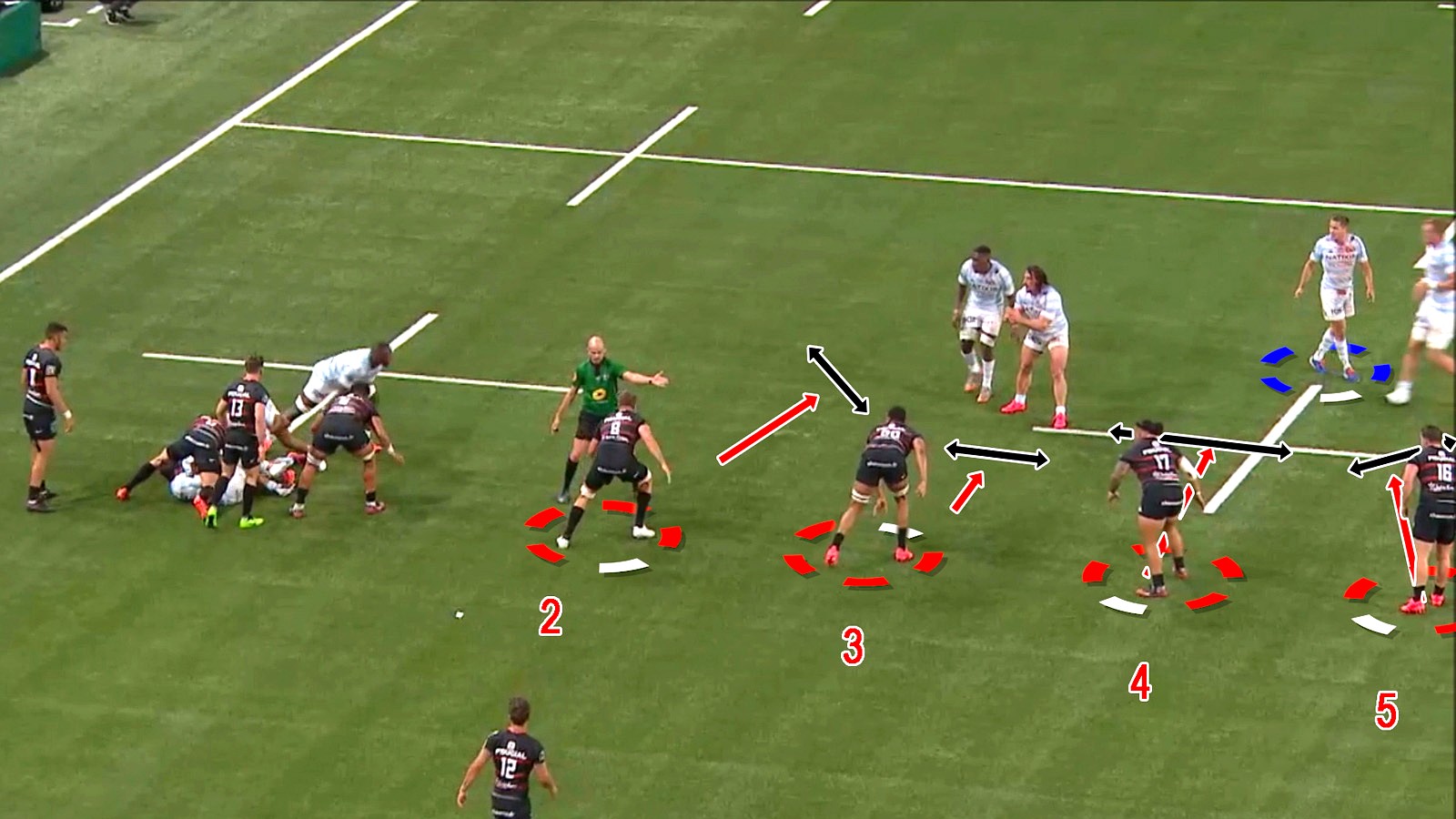
Rugby defensive ruck structure analysis showing player positioning and defensive roles

How to Defend Rucks Effectively in Modern Rugby

Rugby defence coaching guide

How to Defend Rucks Effectively: A Practical Coaching Framework

Effective ruck defence is not simply about placing two defenders beside the breakdown. It requires players to read the attacking picture, identify the immediate threats and rebuild a connected defensive line before the ball moves.

This guide gives rugby coaches a practical framework for organising defence around quick and slow rucks. It connects defensive structure with tackling skills, communication, footwork and decision-making, helping coaches create realistic rugby training exercises instead of isolated drills with no tactical context.

Whether you coach youth, amateur, academy or senior rugby in the United Kingdom, Ireland, the United States, Canada, Australia, New Zealand or South Africa, the same objective applies: give every defender a clear responsibility while preserving the connection of the whole defensive line. For a wider collection of activities, also explore our rugby defence drills and defensive systems guide .

Read the ruck Recognise ball speed, field position and the attacking shape.
Assign responsibilities Protect the inside, control close runners and organise the edge.
Reconnect the line Reload quickly and remove gaps before the next attacking phase.
Breakdown organisation

What Is Effective Ruck Defence?

Ruck defence is the collective organisation used to protect the space around a breakdown and rebuild the defensive line before the next phase. It does not mean sending defenders into every ruck. Once the attacking team has secured possession, the priority is often to reload, communicate and prepare for the threats created by the next pass.

Instead of giving players one fixed position, rugby coaches should train them to answer three questions as soon as a tackle becomes a breakdown:

1 How quickly is the ball available? Fast and slow rucks create different defensive pressures.
2 What is the immediate attacking threat? Identify the pick-and-go, scrum-half, first receiver and close forward runners.
3 Where is the defensive line vulnerable? Protect the inside first, then reconnect defenders towards the width.

This approach turns defensive rugby drills into decision-making exercises. Players learn why they move rather than simply memorising where to stand. Collective organisation should also be supported by strong individual tackle footwork and defensive approach skills .
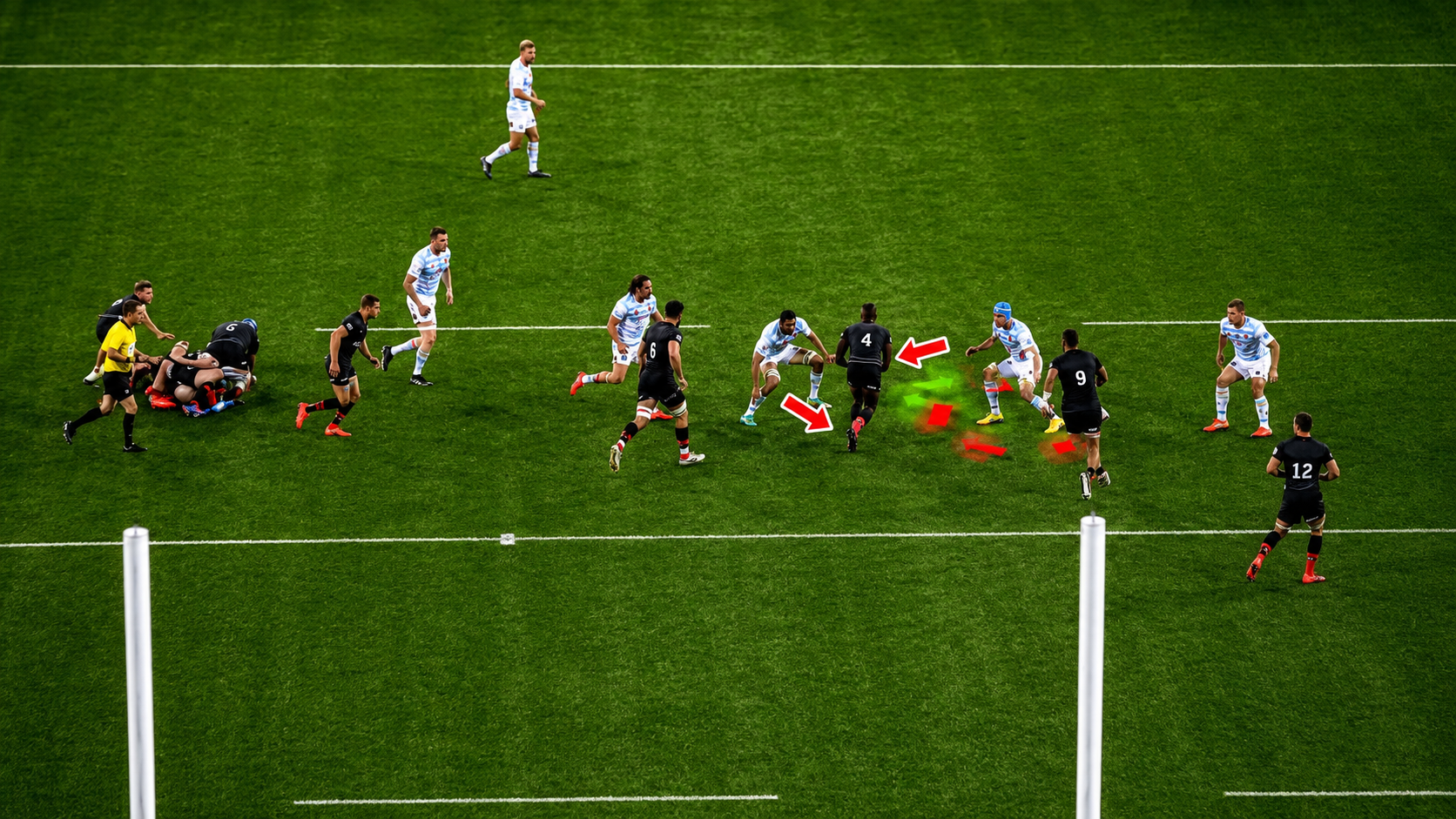
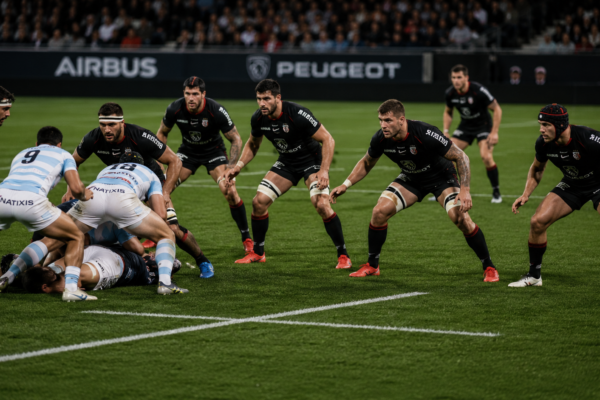
Rugby ruck defence coaching analysis showing defenders reading the attacking shape beside a breakdown
Effective ruck defence starts by identifying the closest attacking threats before reconnecting the line towards the outside.

Build a Smarter Ruck Defence

Build clear and effective defensive structures around the ruck. Learn how to organise the fold, assign roles, protect key spaces and keep your defensive line connected from phase to phase.
Scan before the ball moves

How to Read the Ruck Picture in Rugby Defence

Before selecting a defensive response, players must understand the picture created by the breakdown. The scan begins before the ball carrier reaches the ground and continues while the attacking team presents and recycles the ball. This gives defenders more time to organise than if they only react to the scrum-half’s pass.

1 Ball speed Fast ball reduces reload time. Slow ball allows the line to reconnect and apply greater pressure.
2 Field position A central ruck creates threats on both sides, while a touchline ruck changes the available attacking space.
3 Defenders removed Count defenders trapped in the tackle, on the ground or still reloading from the previous phase.
4 Attacking shape Identify the pick-and-go, scrum-half running threat, first receiver and any forward pod forming outside.

A rugby coach should vary these four elements during defensive training. Repeating the same ruck position and the same attacking option teaches players to anticipate the drill rather than read the game. Understanding common rugby attacking systems and forward pod shapes helps defenders recognise what the opposition may play next.

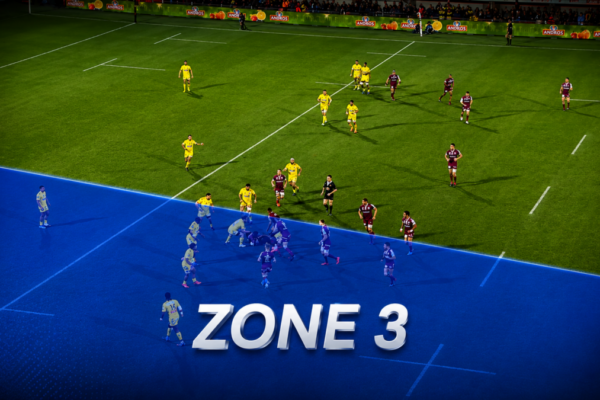
Rugby defensive structure around a ruck with numbered defenders and movement arrows
Defenders must reload with connected spacing while simultaneously tracking the close runner, first receiver and attacking width.

Simple coaching exercise: freeze play immediately after a tackle and ask defenders to identify the ball speed, closest threat and vulnerable space. Restart the phase live once they have communicated their responsibilities. Gradually reduce the time available until the scan becomes automatic.

Role clarity under pressure

Defensive Roles Around the Ruck

Coaching terminology varies between rugby nations and clubs. Some teams use D1, D2 and D3, while others prefer A, B and C defenders or terms such as guard and bodyguard. The labels matter less than giving each player a clear responsibility from the inside of the breakdown towards the touchline.

D1

Protect the ruck edge

The closest defender controls the space beside the breakdown. This player must be ready to stop a pick-and-go, track a scrum-half running threat and prevent an easy break through the inside seam.

Coaching cue: arrive square, communicate early and never turn towards the ruck.
D2

Control the close runner

The second defender connects with D1 while identifying the nearest forward runner. This role prevents a short carry or tip-on pass from creating separation between the ruck defence and the wider line.

Coaching cue: stay connected inside while keeping vision on the attacker.
D3

Track the first receiver

The third defender reads the fly-half, first receiver or forward pod and communicates whether the line should press, hold or adjust. This defender links the close defence with the players covering width.

Coaching cue: scan inside and outside before accelerating forward.
EDGE

Maintain line connection

Outside defenders preserve spacing and remove attacking width. They must move with the inside defenders rather than chasing the ball independently and opening a soft shoulder between two tacklers.

Coaching cue: move together, communicate the threat and protect the inside shoulder.

Coach responsibilities, not shirt numbers

After every tackle, the nearest available player should fill the most urgent defensive role. Rotate forwards and backs through each responsibility during rugby training so the system survives fatigue and broken play. Our defensive tracking and inside-shoulder drills provide useful progressions for developing this connection.

Make the 1-3-3-1 Work

Stop relying on rigid patterns that disappear under pressure. Learn how to build, teach and adapt a complete 1-3-3-1 attacking framework your players can understand, execute and evolve on the field.
Adapt the system to the threat

Ruck Defence Systems for Different Attacking Options

An effective rugby defensive system cannot use identical spacing against every attacking picture. The organisation required to stop a pick-and-go is different from the line needed against a 9–10 transfer or a forward pod. Players should adapt from shared principles rather than wait for a new call from the touchline.
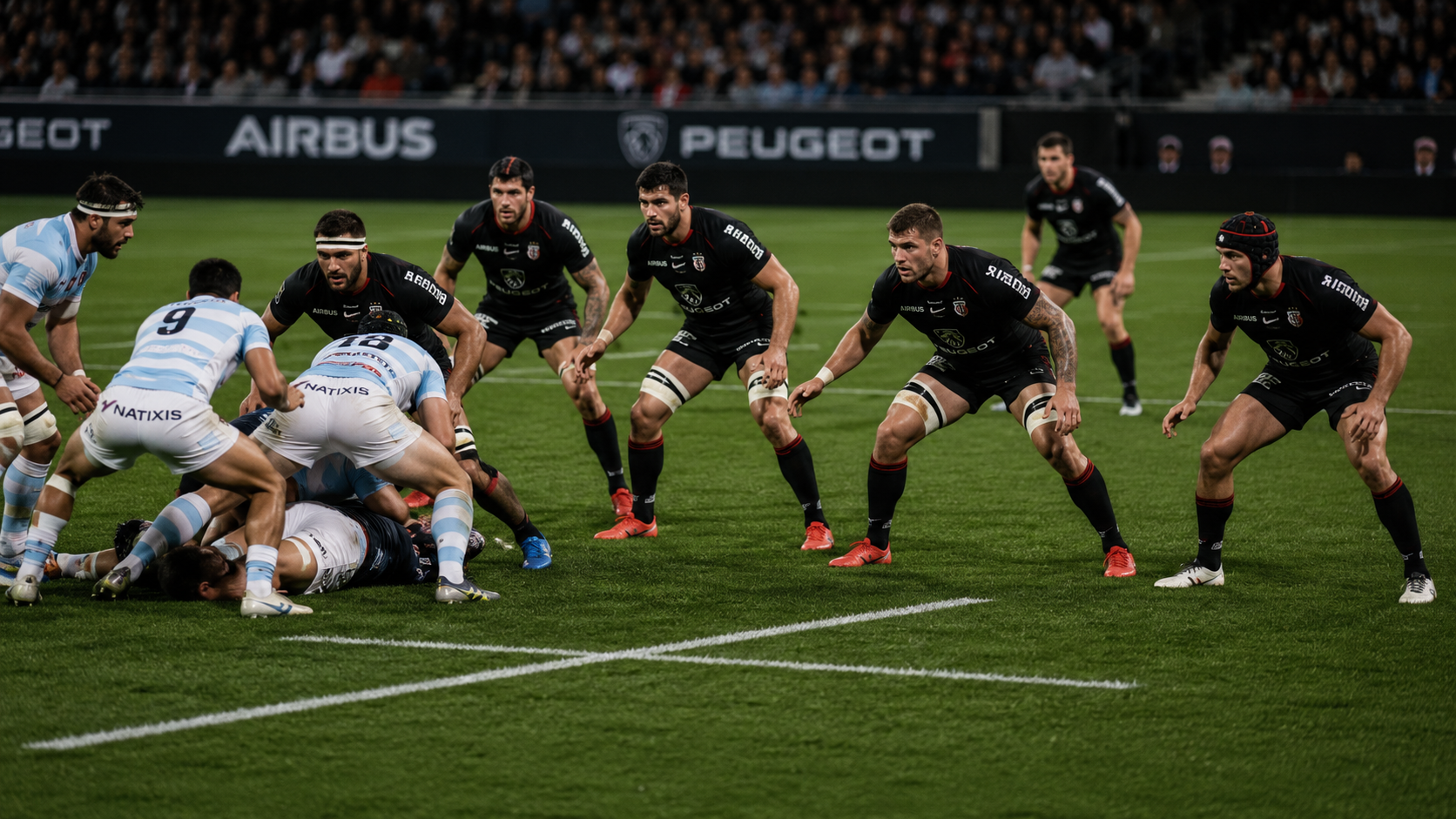
Modern rugby ruck defence with a connected defensive line organised beside the breakdown
Close defenders protect the breakdown while the wider line remains connected and ready to move.

Against a pick-and-go

Strengthen the ruck edge with a square first defender and close inside support. Wider defenders must remain connected without collapsing prematurely towards the ball.

Against a scrum-half carry

The closest defenders track both shoulders of the scrum-half. They should communicate early and avoid turning inwards, which would expose a pass behind them.

Against a 9–10 transfer

D1 controls the threat from nine while the next defenders advance together towards the first receiver. Chasing the pass independently creates an inside seam.

Against a forward pod

Defenders must identify the carrier, tip-on option and player positioned behind the pod. Connected inside-out movement prevents one attacker from fixing several defenders.


What Rugby Coaches and Directors Say

Here are a few testimonials from coaches and rugby directors who have taken our courses. Some coaches, particularly those working at higher levels, have asked not to be identified publicly.

Practical rugby training

Three Ruck Defence Drills for Rugby Training

Good ruck defence exercises must combine scanning, communication, movement and tackling decisions. These three drills can be used during a youth, amateur or senior rugby training session and progressed from touch conditions to controlled contact.
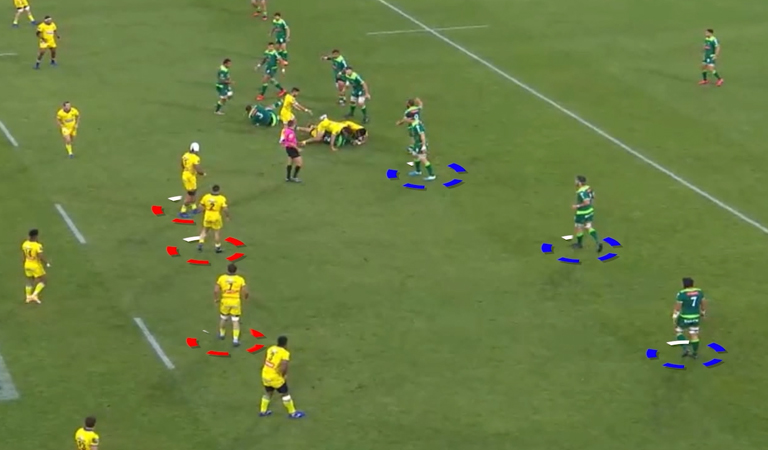
Rugby ruck defence drill showing defenders reloading and reconnecting across the field
Players must reload from the previous phase while preserving connection from the ruck towards the outside.
1

Ruck Reload and Role Call

Set-up: Use four defenders, three attackers and two possible breakdown positions inside a 15 × 15 metre area.

Action: The coach indicates the next ruck. Defenders reload, identify D1, D2 and D3, then communicate before the ball is released.

Progression: Change the available reload time to create both quick-ball and slow-ball situations.

2

Pick, Run or Pass

Set-up: Position a scrum-half, two close attackers and three defenders beside a marked breakdown.

Action: Attack chooses between a pick-and-go, a scrum-half carry or a pass to the first receiver. Defenders score by identifying and closing the threat without losing connection.

Progression: Add a player behind the first receiver to introduce a play-behind option.

3

Multi-Phase Connection Game

Set-up: Play six against six in a 25 × 30 metre channel, starting with touch or tackle shields.

Action: Attack plays four phases from different ruck positions. Defence earns a point for correct role calls, connected spacing and stopping momentum.

Progression: Remove coaching pauses and allow the attack to change direction freely.

From clarity to pressure

How to Coach Ruck Defence from Walk-Through to Live Play

Ruck defence should be introduced progressively. Players first need clear language and responsibilities, then variable attacking information and finally the speed, fatigue and uncertainty of a realistic rugby game.
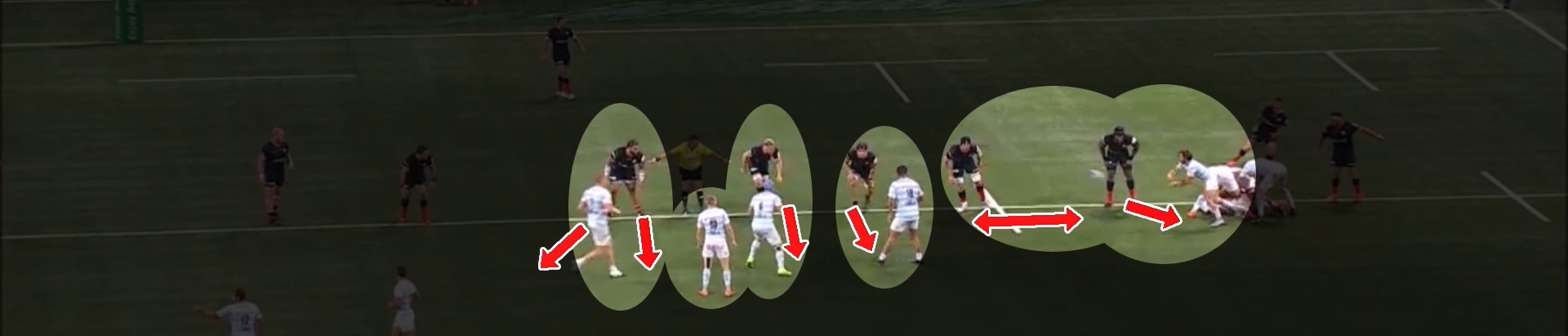
Rugby coaching analysis showing defensive spacing and responsibilities around a ruck
Each defender must understand the space and attacking threat controlled by their role.

Recommended coaching progression

1 Walk-through organisation

Use a scripted attack so defenders can practise role calls, spacing and movement without time pressure.

2 Add attacking choices

Allow pick-and-go, scrum-half carry and first-receiver options while varying ball speed and ruck position.

3 Finish with live phases

Use conditioned games that reward defensive communication, connection and dominant outcomes across several phases.

Common ruck defence coaching mistakes

! Overloading the breakdown

Too many defenders beside the ruck leave fewer players available to protect the width.

! Teaching positions without triggers

Players need to know what information changes their role, spacing or line speed.

! Introducing contact too early

Heavy contact can hide poor scanning and communication. Build the decision first, then increase physical pressure.

Questions from rugby coaches

Rugby Ruck Defence FAQ

What is the best way to defend a ruck?

Start by reading ball speed and identifying the closest attacking threats. Protect the ruck edge, assign clear inside-to-outside responsibilities and reconnect the defensive line before the scrum-half releases the ball.

How many defenders should be positioned around a ruck?

There is no fixed number for every situation. The correct organisation depends on ball speed, field position, attacking shape and how many defenders were involved in the previous tackle. Avoid overloading the breakdown and leaving space outside.

Which rugby drills improve ruck defence?

Use reload and role-call exercises, pick-run-pass decision drills and multi-phase conditioned games. Begin with touch or controlled movement, then progressively add speed, fatigue and appropriate contact.

How often should a team practise ruck defence?

Short, regular blocks are usually more effective than one isolated session. Include ruck organisation within tackle training, defensive-unit work and conditioned games so players repeatedly solve realistic breakdown situations.

Effective ruck defence is built through shared responsibilities, repeated scanning and realistic rugby practice. Give players a framework they can adapt under pressure, rather than a fixed shape that only works against one attack.