Rugby Pod Rotation: How the 1-3-3-1 Maintains Its Attacking Shape
Understanding forward movement
What Is Pod Rotation in Rugby?
Pod rotation describes how forwards reorganise after each breakdown to maintain an effective 1-3-3-1 rugby attacking shape across several phases.
The initial 1-3-3-1 structure places two central pods of three forwards between two players occupying the wide channels. Once play begins, those starting positions cannot remain fixed.
Carries, rucks, line breaks and changes in direction continually alter the attacking picture. Players must decide whether to move into another area, recover their depth and width or work around the breakdown to support the next phase.
Effective rugby pod rotation is therefore a decision-making process. Players read the position of the ball, the other pod, the available backs and the defensive line before moving. Coaches can first establish the starting positions with this guide to 1-3-3-1 rugby pod distribution .
Why Pod Rotation Matters in the 1-3-3-1
Preserve Attacking Width
Balanced forward distribution prevents both pods gathering near the same breakdown and retains a genuine threat on both sides of the pitch.
Reduce Unnecessary Running
Efficient realignment allows forwards to remain useful without repeatedly travelling from one side of the field to the other.
Maintain Several Options
Connected pods give the first receiver carrying, tip-on and pull-back options while forcing the defence to protect the full width.
What should the rugby coach observe?
Do not judge the rugby training exercise only by whether the attack crosses the gain line. Check whether width remains available, both forward groups stay balanced and players communicate before moving.
Simple visual references
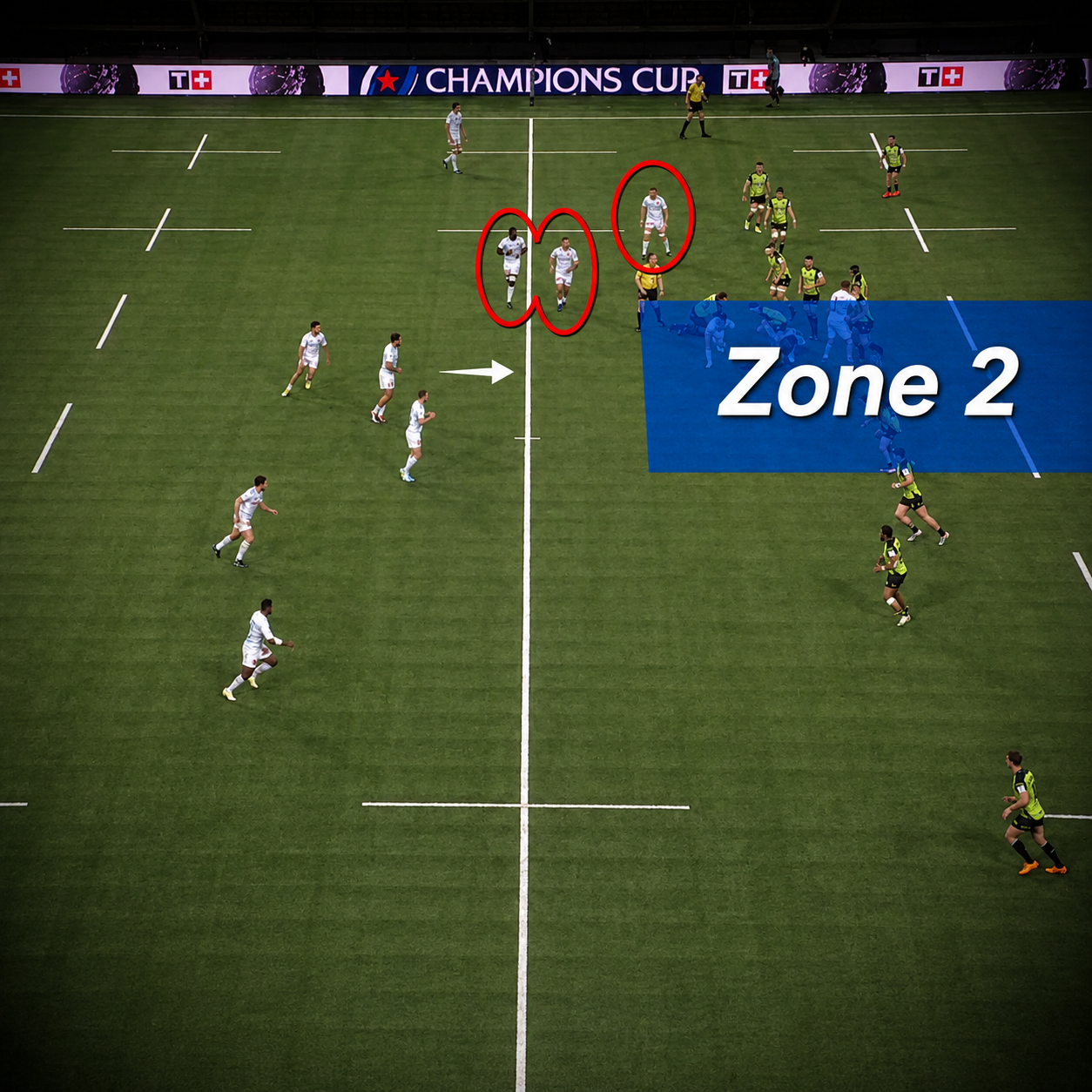
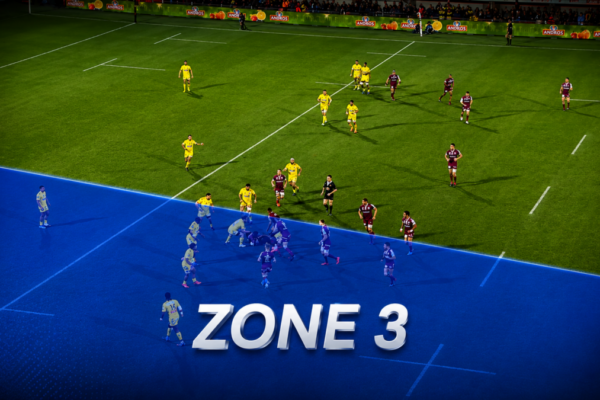
Using Field Zones to Guide Rugby Pod Movement
Dividing the width of the pitch into three broad areas gives players a simple reference for deciding whether to rotate, reload or remain available in their current part of the attacking shape.
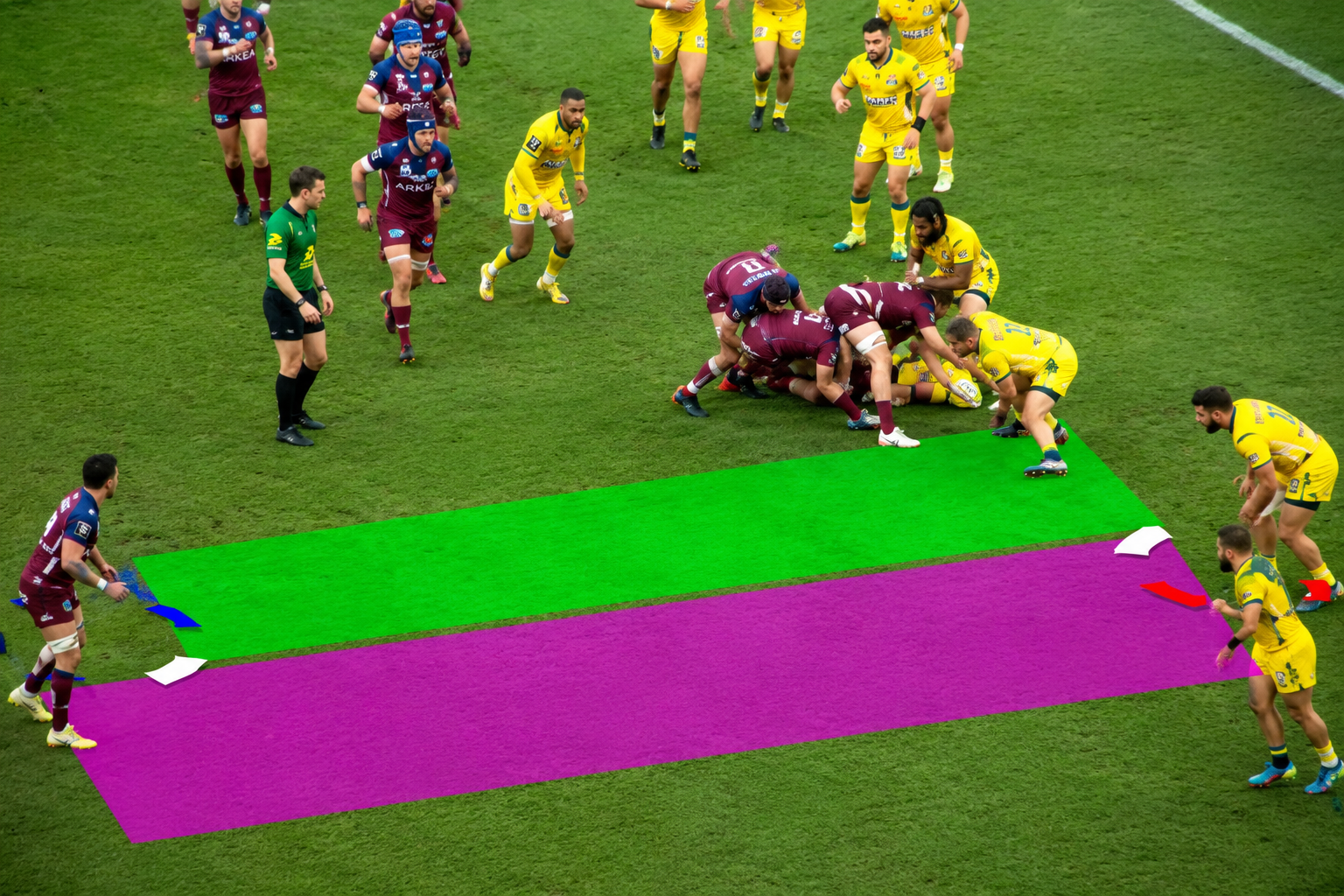
The zones do not permanently belong to individual players or pods. Their purpose is to help the team recognise which part of the pitch already has enough attacking options and which area must remain occupied.
The Ball-Side Wide Area
Players closest to the direction of play provide immediate carrying, passing and breakdown support.
The Central Decision Area
Forwards must scan both sides before deciding whether to fold, reload or temporarily join another group.
The Far-Side Area
Retaining players away from the ball preserves width and provides an option if the attack changes direction.
Field zones are reference points—not running tracks
The rugby coach should use zones to simplify the first decisions, then gradually allow players to adapt. Possession, support and continuity always take priority when the attacking structure is temporarily disrupted.
Reading the complete attacking picture
Why the Middle of the Pitch Creates the Hardest Pod-Rotation Decisions
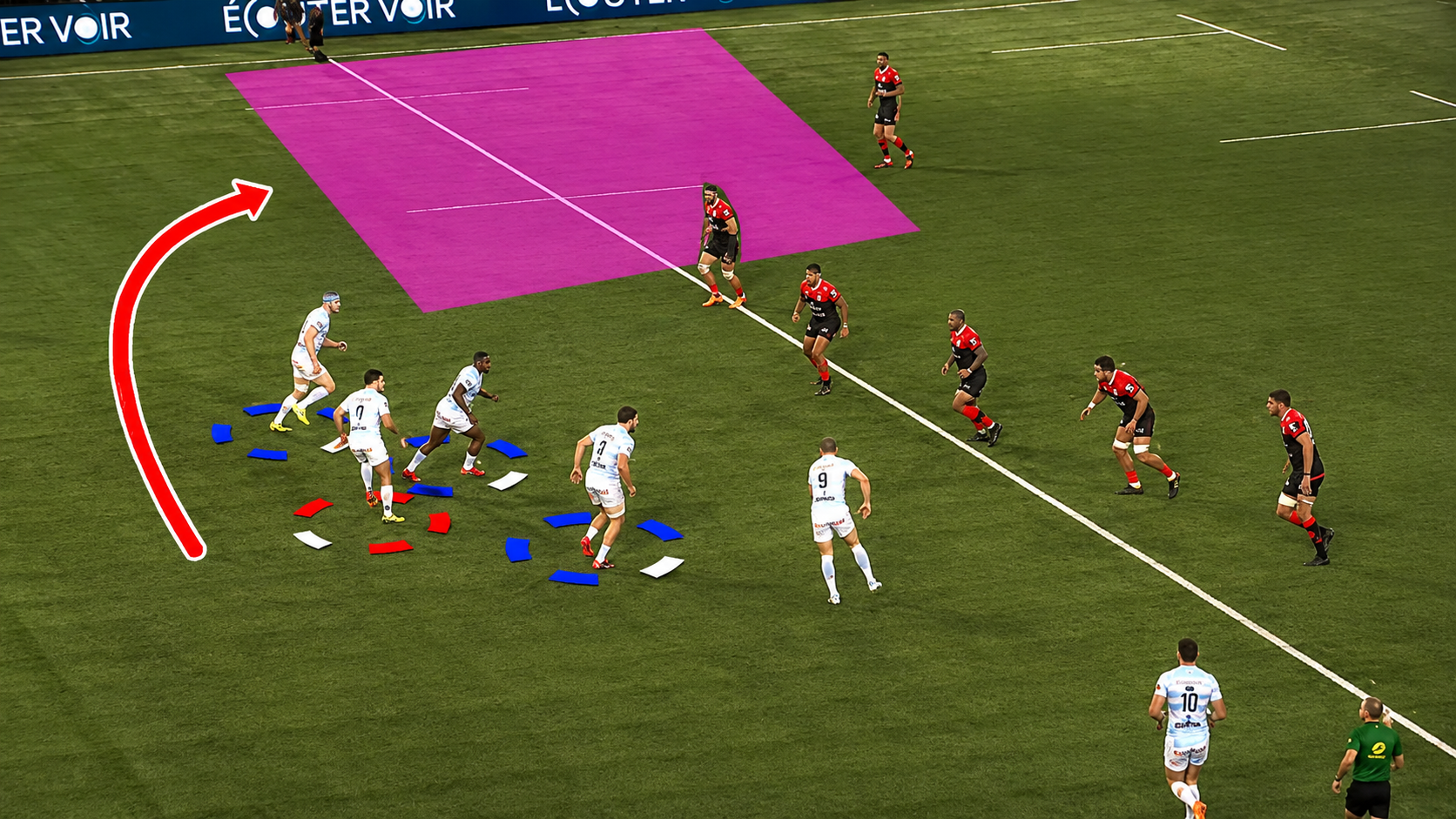
A breakdown near the touchline gives players a relatively clear reference. A central breakdown leaves both sides available, so forwards must scan the entire attacking shape before deciding where to move.
Automatically folding in the direction of the previous phase can place too many forwards on one side of the ruck. The team may appear well supported near the ball while losing its width and attacking threat on the opposite side.
A forward returning to their feet should not look only at the next breakdown. Their decision must account for the other pod, the backs, the wide forwards and the speed at which the attack can play again.
Where is the other forward pod?
How many attacking options are already available on each side?
Is the ball quick enough to continue in the same direction?
Where are the backs and wide forwards positioned?
Which area currently lacks a credible attacking threat?
Identify the ball, the other pod and the available attacking options.
Share the decision before players begin moving in different directions.
Reorganise quickly while preserving width, depth and continuity.
A collective decision is easier to correct
A slightly imperfect decision made together is usually more effective than three forwards reading the situation differently. During rugby training, use realistic opposition and connected defensive pictures from these rugby defence drills and coaching principles to make the attacking decisions more representative of match play.




A progressive coaching framework
How to Coach Pod Rotation Without Making the 1-3-3-1 Rigid
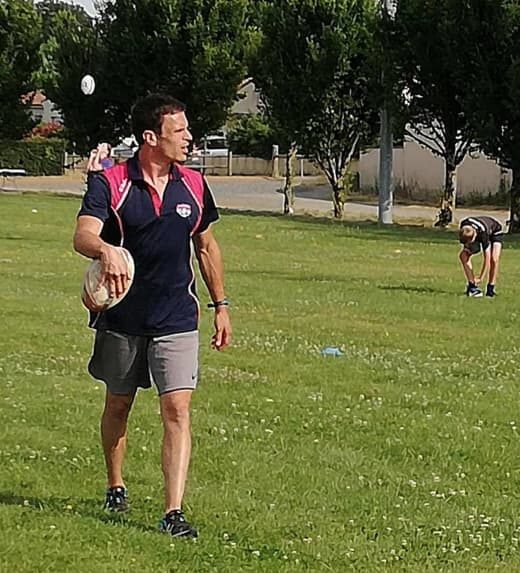
Rugby coaches should provide clear starting references before adding pressure and freedom. The objective is to develop shared decisions, not to recreate a perfect tactical diagram after every breakdown.
Establish a Shared Vocabulary
Every player must understand rotation, reloading and folding. Use the same language during walkthroughs, rugby training drills and match reviews.
Introduce Clear Field References
Begin with broad zones and an organised starting shape so players can see where the two forward pods and wide forwards should provide threats.
Coach the Scan Before the Movement
Ask players to identify the other pod, the available backs, the speed of possession and the defensive picture before they begin running.
Accept Temporary Disorganisation
Possession and continuity take priority after a line break or disrupted ruck. Once the immediate problem is solved, the team can rebuild its shape.
Questions for the rugby coach
- What information did the players see?
- Why did the pod rotate rather than reload?
- Was width preserved on the opposite side?
- Did the players communicate before moving?
Stop play briefly to clarify positions, language and the information players missed.
Allow them to explain the decision before the coach provides the solution.
Let several phases continue before reviewing whether the attacking shape recovered.
Coach perception before conditioning
Pod rotation problems are not always caused by poor fitness. Players often run unnecessary distances because they have not identified the correct attacking picture. Improve their scan and communication before demanding more movement.
Progressive rugby training exercises
Four Rugby Pod Rotation Drills: Building the Starting References
Begin without defensive pressure so players can understand the movement and communication required to maintain the 1-3-3-1 attacking shape. These first two rugby coaching drills establish the foundation.
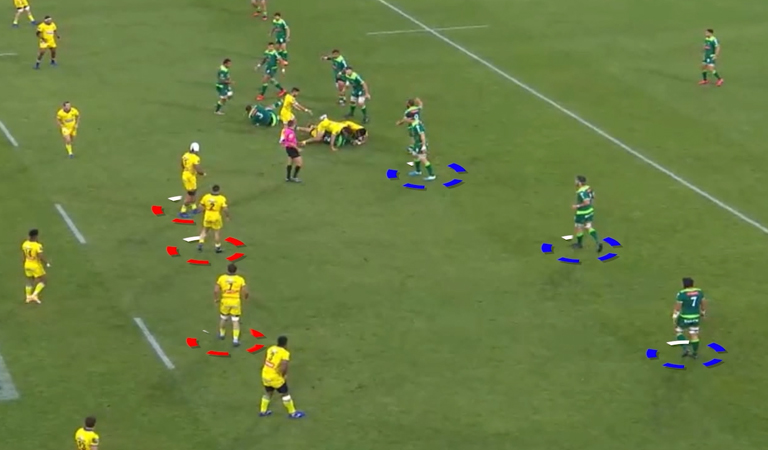
Three-Zone Pod Walkthrough
Establish the starting shape, shared vocabulary and basic movement references.
Organisation
Mark three broad field zones with cones. Position the two central pods and the two wide forwards, then simulate a breakdown in different areas of the pitch.
Player task
After each simulated ruck, players identify whether they should rotate, reload or fold. They must communicate the decision before moving.
Coaching points
- Recover useful depth rather than standing flat beside the ruck.
- Maintain a genuine attacking option on both sides.
- Use the same movement vocabulary throughout the exercise.
Wide-Channel Rotation and Reload
Prevent the far-side pod from automatically following the ball towards the edge.
Organisation
Move the ball through two or three controlled phases towards a wide channel. A coach or scrum-half determines where each new breakdown is formed.
Player task
Players closest to the direction of play provide the immediate options. The opposite pod must remain connected and reload efficiently instead of travelling unnecessarily across the full width.
Coaching points
- Keep width available if the attack changes direction.
- Scan the number of players already positioned beyond the ball.
- Communicate which pod becomes the next attacking reference.
From controlled movement to game situations
Rugby Pod Rotation Drills 3 and 4: Decision-Making Under Pressure
Once the wide-channel principle is understood, the rugby training progression can introduce central breakdowns and situations in which the original attacking shape has been disrupted.
Central-Breakdown Decision Exercise
Develop the ability to assess both sides of a central ruck before choosing whether to fold, reload or remain available.
Starting situation
Place the breakdown in the central area of the pitch. The forwards must assess how many forwards and backs are already available on each side before moving.
Questions used by the coach
- Where is the other pod?
- How many attacking options already exist beyond the ball?
- Which area of the pitch is currently underloaded?
- What would happen if the whole pod followed the ball?
Coaching focus
Allow players to explain the information they identified and the reason for their movement. The decision should be collective rather than several forwards reacting independently.
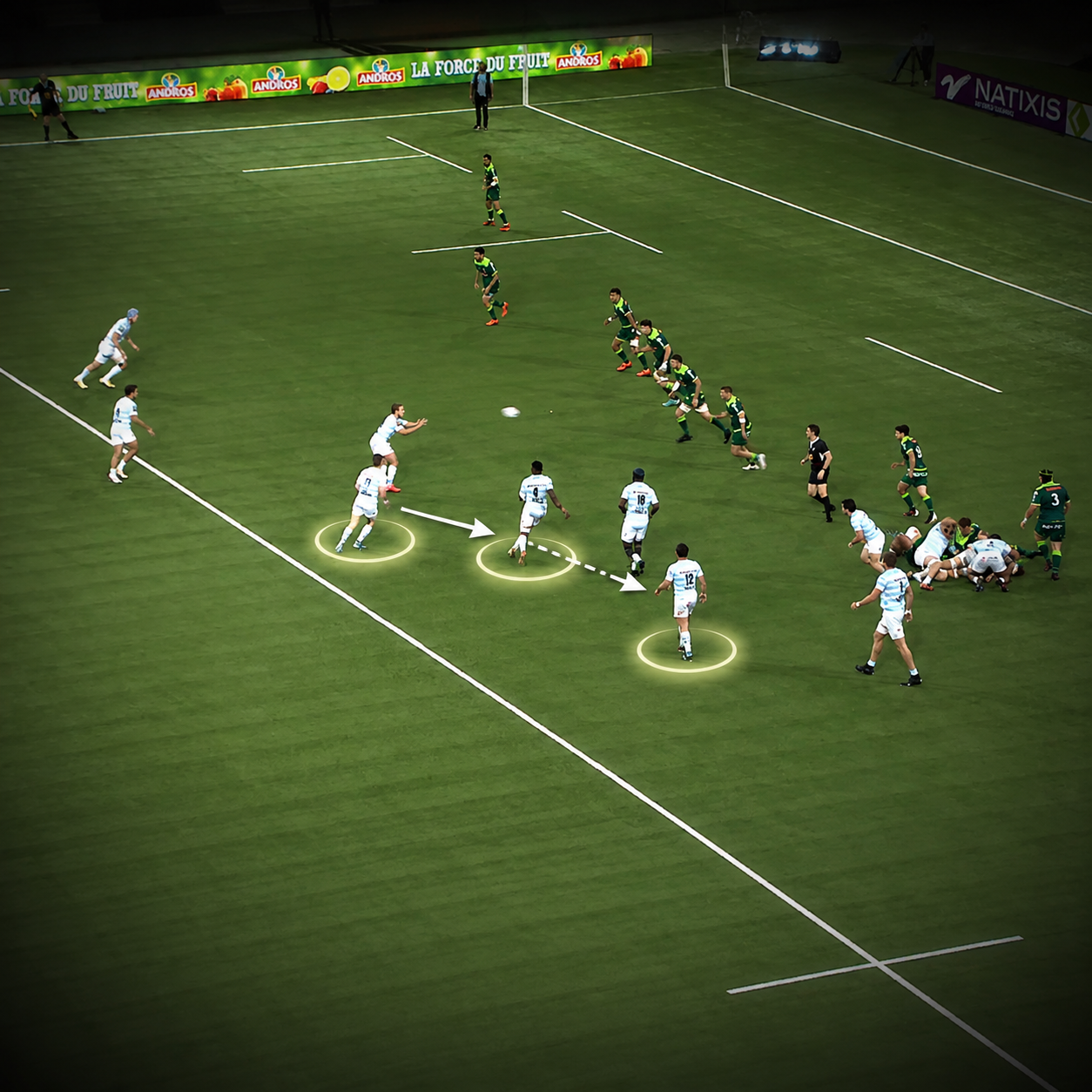
Rebuilding the Shape After Disrupted Play
Help players retain possession and progressively recover the attacking structure when a normal pod rotation is no longer possible.
Situations introduced by the coach
- A line break changes the position of the next breakdown.
- A counter-attack begins without the normal starting distribution.
- Slow possession gives the defence time to reorganise.
- A player temporarily leaves the pod to support the breakdown.
Player priority
Players first deal with the immediate requirement to protect possession and maintain continuity. They then communicate and gradually rebuild two balanced forward groups during the following phases.
Coaching focus
The objective is not to recover the original diagram immediately. Observe whether the team identifies the urgent problem, reconnects and restores a credible attacking threat across the pitch.
Keep the progression faithful to match situations
Begin with controlled pictures, progress towards the central area, then add the unpredictable situations that already occur in rugby: line breaks, counter-attacks, slow ball and players being drawn into the breakdown.

You may also like
Rugby Attacking Systems: Pods, Shape and Defence
Rugby Attacking Structures: 1-3-3-1, 2-4-2 & Pods