1-3-3-1 Rugby System: A Coach’s Guide to Pods, Runners and Zones
The 1-3-3-1: get your players set before the defence is
Most club, school and college teams do not lack effort or talent. What they lack is a shared picture of where everyone stands before the ball is played. That is what an attacking system gives you.
The 1-3-3-1 is one of the shapes used by professional teams, but you do not need professional players to use it. You need time, clear positions and a common language.
Four groups across the field
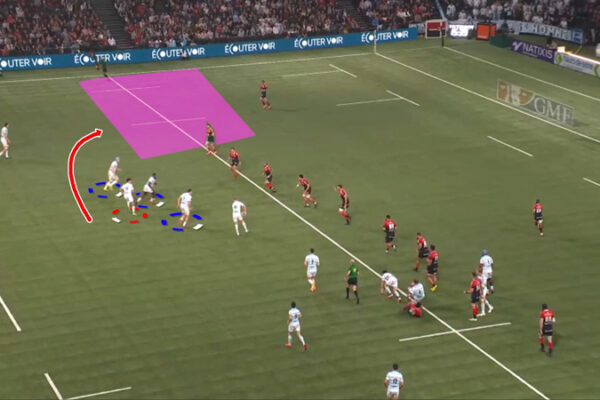
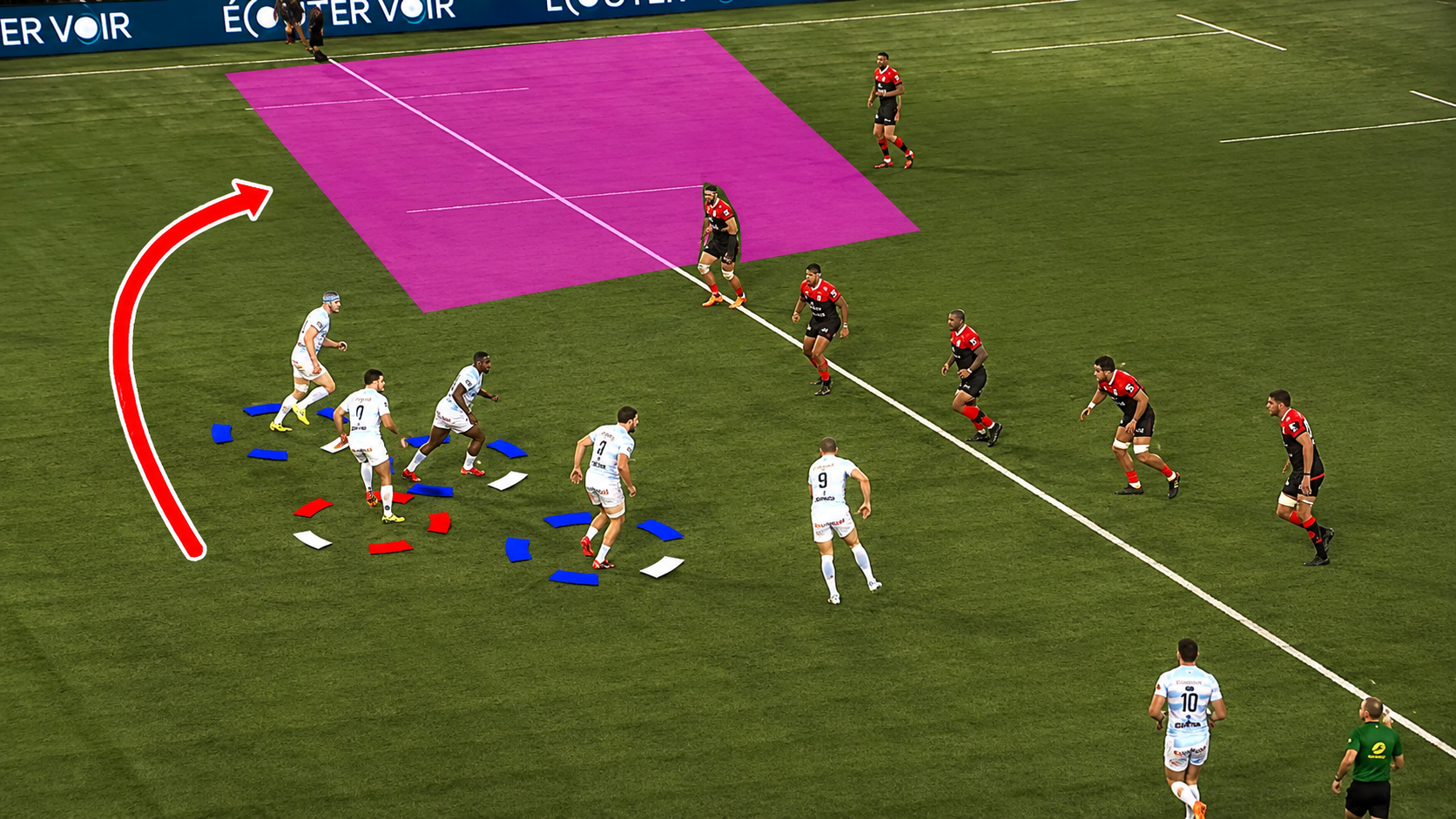
In the 1-3-3-1, your eight forwards form four groups. One runner holds each edge, around the 15-metre lines, and two pods of three forwards work between them.
With the ball between the 15-metre lines, the pod in front of the fly-half is Pod 10 and the pod in front of the inside centre is Pod 12. The ball can then go through Pod 10, through Pod 12, or out to the runners.
1-3-3-1
A runner on each edge, Pod 10 and Pod 12 in the middle.
Simplified view: gold = runners, white = pods. Players change places from phase to phase.
Why use a system at all?
Look at what happens at a ruck. Attack commits the ball carrier, two or three support players and a scrum-half, so three or four attackers are tied up. Defence may commit only one or two. The more attackers are stuck at the ruck, the harder it is to find space.
A system answers that problem. Your players know where to go and arrive there quickly, so they are organised before the defence has had time to organise. Everything else in attack starts from this.
Football, basketball and handball coaches talk about their shapes openly. Rugby has been slower to do the same, but naming a shape is simply a way of getting fifteen players to think the same thing at the same time.
Does a system take decisions away from players?
No. What your players do still depends on the ruck before: did we go forward, was the ball quick, is the defence set? A system does not remove those reads. It gives every player the same starting point to make them from.
If fifteen players each interpret their positions freely, you get fifteen different decisions at the same moment. With shared positions, training conversations change from “where should you have been?” to “which option was best here?”
Use the strengths you actually have
A good system fits your players instead of forcing them into a mould. The aim is to attack the weak spots of the opposition with the strengths of your own squad, inside a collective plan.
Three zones: clear, build, score
Top teams size these zones differently, and the right balance depends on your players. The 1-3-3-1 course concentrates on the build zone.
Where the real work starts
Knowing the shape is the easy part. The hard part is how your players move into it, who does what in each group, and which option to choose depending on what just happened at the ruck.
That detail is exactly what the course is built around, with match footage and slides you can use with your own team.
What to expect at club, school or college level
If you already have a system, borrowing ideas from the professional game can sharpen it. If you do not, start with the basics: how your players move and circulate together.
Be realistic about time. Mastering a system takes more than one season, because you keep adjusting how you present it. Build it early so you can win your first games, then refine it before the knockout stage.
Build the 1-3-3-1 your players can actually use
The course takes you from the idea to a system your own players can run, step by step, with match analysis and editable PowerPoints you can present to your squad.
See the 1-3-3-1 courseOr start free: 1-3-3-1 Rugby Pod DistributionAlso read: 1-3-3-1 vs 2-4-2, which shape fits your team?
And: Rugby Attacking Structures: 1-3-3-1, 2-4-2 & Pods
Then: When should the scrum-half carry?
Next: Rugby counter-attack after a turnover

You may also like
1-3-3-1 vs 2-4-2 in Rugby: Which Attacking Shape Should Your Team Use?
Rugby Attacking Systems: Pods, Shape and Defence