1-3-3-1 vs 2-4-2 in Rugby: Which Attacking Shape Should Your Team Use?
Where do your forwards stand before the ball is played?
Before the ball reaches the first receiver, every attacking team has already answered one question: where do my forwards stand? The numbers in 1-3-3-1 and 2-4-2 are that answer.
Read them from one touchline to the other and each number is a group of forwards. Both shapes use all eight forwards, so the real difference is how you spread them across the field and what that asks of your players.
What the numbers mean
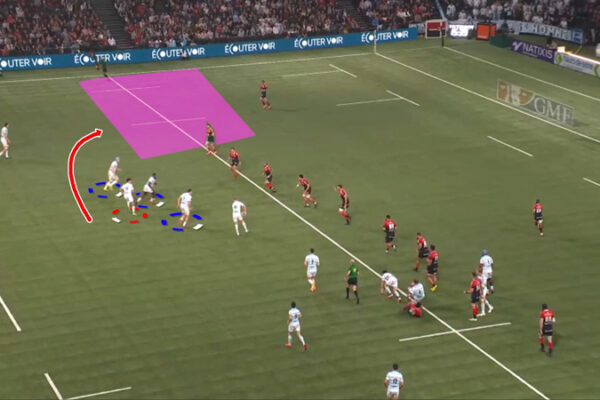
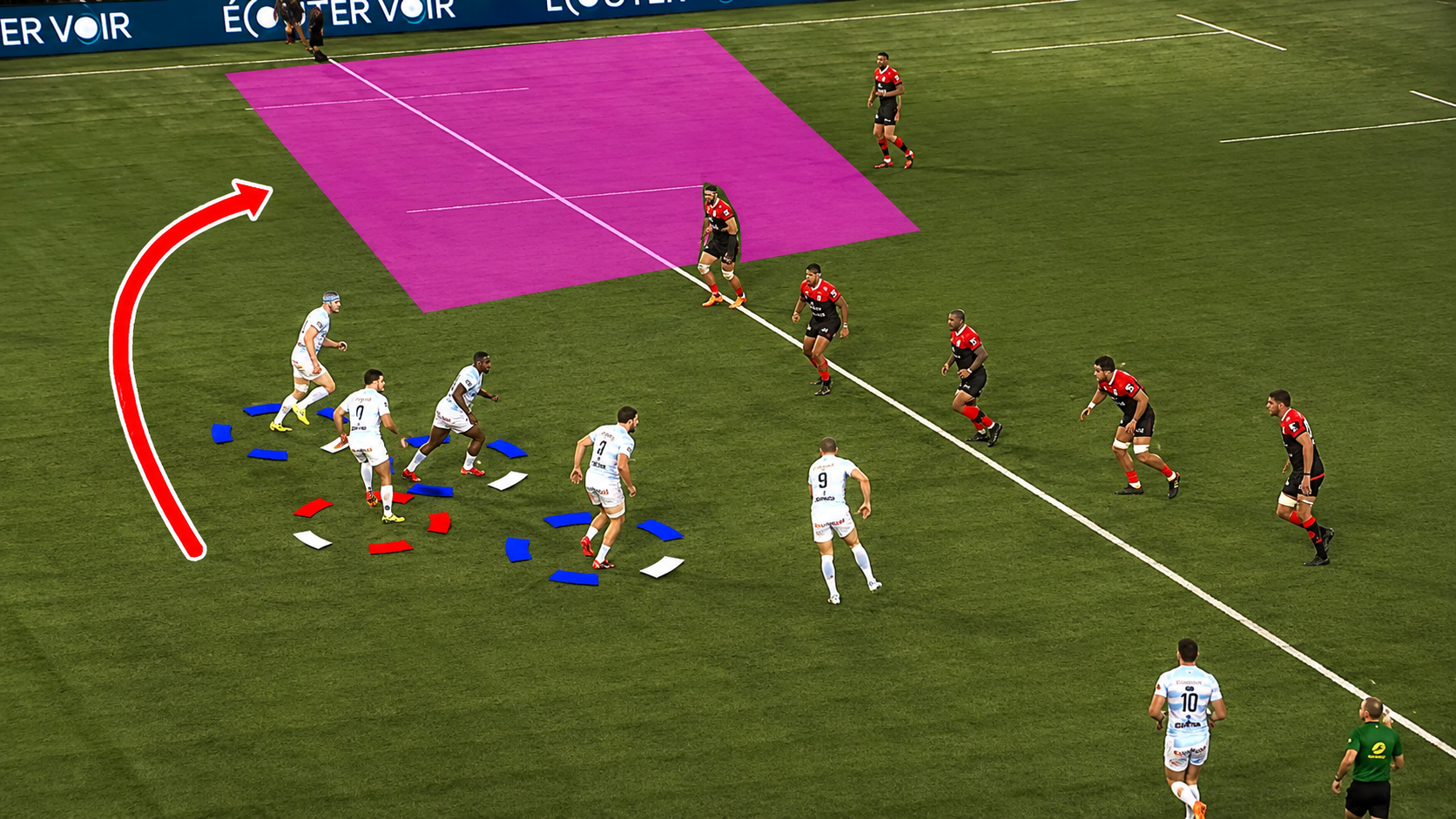
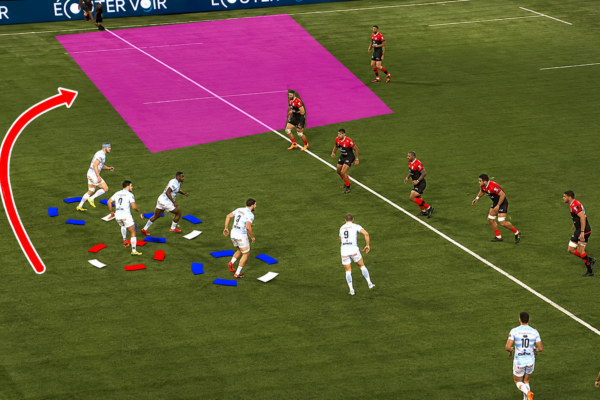
In a 1-3-3-1, one forward holds the wide channel on each side, around the 15-metre lines, and the other six form two pods of three in the middle. Richard Whiffin calls it the most widely used framework in the professional game.
In a 2-4-2, two forwards work each edge and four play in the middle. In a 2018 analysis for RugbyPass, Ben Smith explained that the Crusaders built their version around one pod in the middle instead of two.
1-3-3-1
One wide forward each side, two pods of three.
2-4-2
Two forwards on each edge, four in the middle.
Simplified view: gold = forwards on the edges, white = forwards in the middle. Players move from phase to phase.
How they play differently
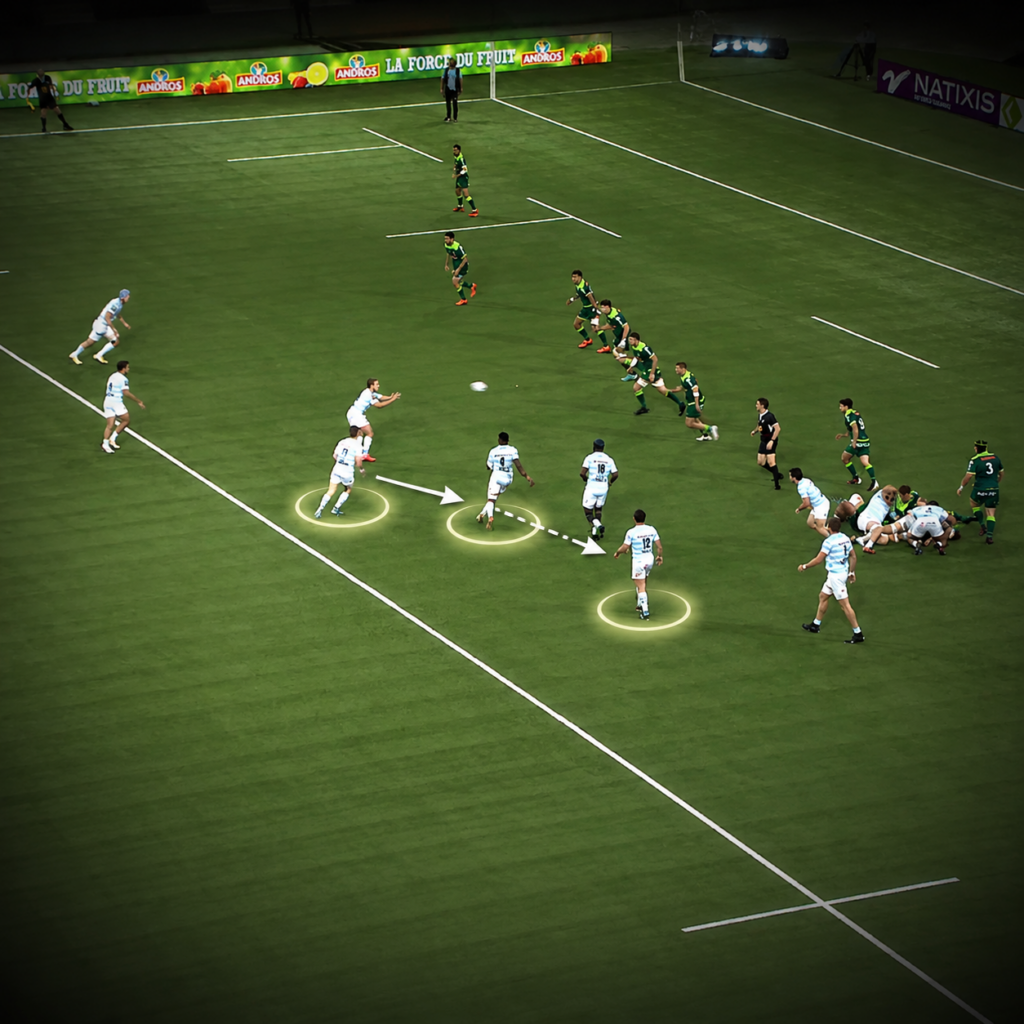
Smith found that 1-3-3-1 teams played more directly off the scrum-half, so they made fewer passes per phase. The 2-4-2 used a first receiver as a link between the breakdown and the pod, which meant more passes and more width.
That is one analysis of Super Rugby sides in 2018: read it as a tendency, not a rule.
Whiffin adds a practical point about people. Put your quickest players on the edges, where they keep the width, and your most powerful carriers in the middle pods.
Neither shape stays fixed
In February 2023, Nick Bishop argued that teams rarely have time to settle into a pure shape, especially after kick returns and turnovers. In his view the 1-3-3-1 often becomes a 1-3-2-2 or a 3-3-2 as players move between channels, and structures have become more compact.
In October 2024, Murray Kinsella wrote that pods of four were back at the top level, and that South Africa used a 1-4-2-1: a pod of four, a pod of two and two wide forwards.
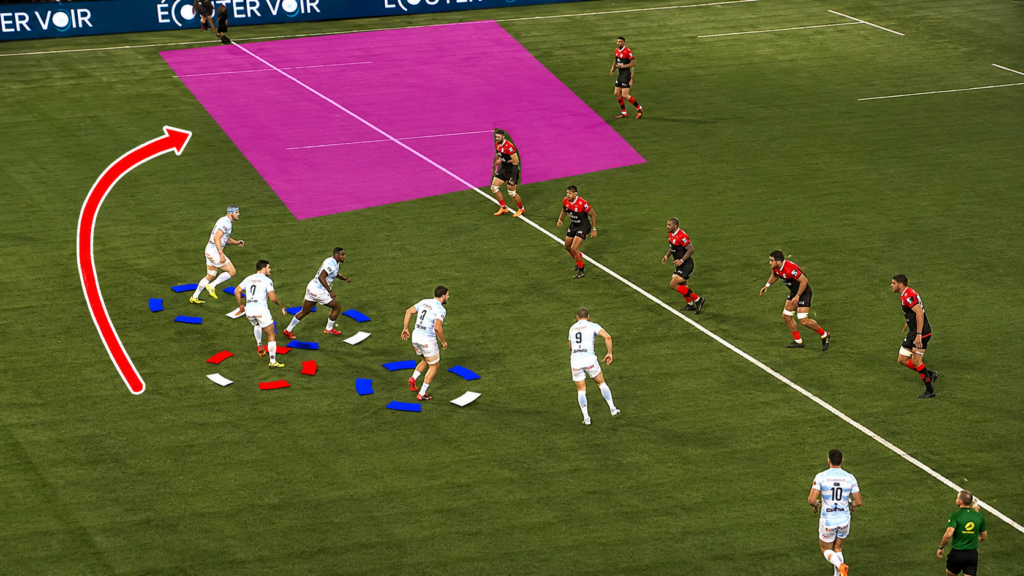
So teach a shape as a reference point your players can read and adjust from, not as a fixed formation.
Which shape fits your team?
There is no universal answer. Four questions help you decide:
A simple way to test a shape in training
Build the 1-3-3-1 your players can actually use
This article gives you the idea. The course covers the restarts, pod distribution from the scrum, lineout and kick-off, pod rotation across the field, the runner role, Pod 10, Pod 12 and the backs, with real match analysis and editable PowerPoints.
See the 1-3-3-1 course Or start free: 1-3-3-1 Rugby Pod DistributionAlso read: Rugby Attacking Structures: 1-3-3-1, 2-4-2 & Pods
And the guide: 1-3-3-1 Rugby System for Coaches
- Rugby Coach Weekly: the 1-3-3-1 attacking framework, Richard Whiffin
- RugbyPass via Rugby365: Revealed, secrets of the 2-4-2 system, Ben Smith, 9 May 2018
- The Rugby Site: how to get into shape on attack and use your spares, Nick Bishop, 22 February 2023
- The 42: Irish 4-pod surprises and the Springboks’ 1-4-2-1 system, Murray Kinsella, 8 October 2024

You may also like
1-3-3-1 Rugby System: A Coach’s Guide to Pods, Runners and Zones
Rugby Attacking Systems: Pods, Shape and Defence