From High School to College Rugby: Building Continuity in USA Rugbygeraldine-couget+1
USA Rugby Pathway
From high school to college rugby, continuity is the real advantage
In the USA, rugby coaches often inherit players with very different backgrounds. Some arrive from organized high school programs, while others have only learned the basics through local clubs or informal competitions.

Different foundations
High school rugby programs vary widely, so arriving players may not share the same defensive habits, breakdown skills, or game understanding.
Faster alignment
College coaches need to align the group quickly around a common game model, especially when preparing for competitive fixtures and championship runs.
Clear standards
Winning teams usually have clearer expectations in attack, defense, and transition — not just more athletic players.
Better structure
Structured coach education helps save time and turns isolated drills into a coherent season plan.
A practical route for coaches
If you are building a program, the best place to start is to define a simple model that players can recognize in every session. That makes it easier to coach the same principles across high school, college, attack and defense.
For the previous step in the sequence, read the article on college rugby coaching in the USA. If you want the foundation before that, here is the guide to rugby coach certification in the USA.
That way, the article works as a true follow-up in the internal linking chain and keeps the reader moving naturally through the site.
Good rugby content is not more information, it is better training material
Most coaches in the USA are not searching for theory alone. They want rugby drills, session planning ideas, exercises for defense and attack, and content they can adapt to their own team level. The best coaching article is the one that helps a reader leave the page with a clearer training plan than the one they had before.
Why practical content matters more than generic advice
A coach does not improve a team by collecting random drills. Improvement comes from using the right exercise at the right moment in the session, then repeating the same coaching language until the habit appears under pressure. Session planning guides and USA Rugby coaching pathways both emphasize this need for structure, progression, and player safety. [web:46][web:47][web:50][web:53]
That is also why your internal linking matters. A reader who starts with coach education should naturally move toward content about building a college program, then toward articles that show how to organize practices, coach decision-making, and select drills with a clear purpose. [web:47][web:49][web:55]
What USA rugby coaches actually search for
Search behavior often follows immediate need: rugby drills, tackle technique, defense structure, breakdown exercises, practice plans, and age-appropriate coaching progressions. Libraries of coaching plans and session templates are popular because they save time and make a practice easier to run without losing structure. [web:46][web:48][web:51][web:56]
If Up Rugby Academy wants stronger SEO with American coaches, the content should keep matching those needs in a natural way. That means using terms like rugby training session, rugby practice plan, coach certification, defensive drills, and attack structure inside helpful paragraphs rather than forcing keywords into empty content. [web:46][web:50][web:51]
What Rugby Coaches and Directors Say
Here are a few testimonials from coaches and rugby directors who have taken our courses. Some coaches, particularly those working at higher levels, have asked not to be identified publicly.




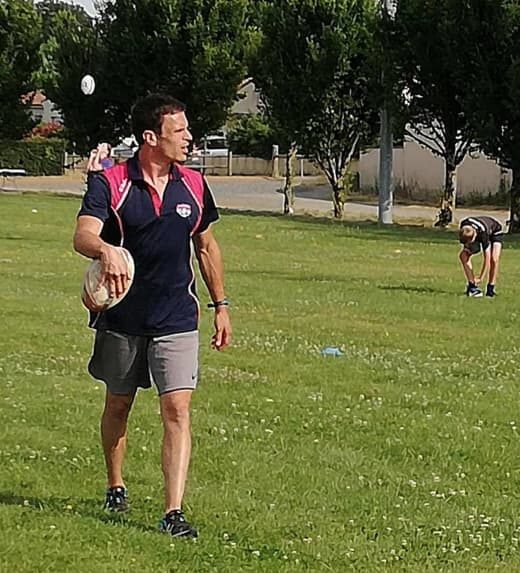
Serge Collinet
“Extremely useful — even essential — for coaching.”
Charles is an expert who shares the knowledge and practical understanding that coaches need every day to maximise their teams’ potential and improve their ability to develop players. These resources can also evolve over time. Congratulations on this tremendous body of work and on your contribution to our game.
Name withheld at the coach’s request
A Fresh Perspective on Rugby Coaching
Up Rugby approaches attacking and defensive systems from a different angle, helping coaches understand the details that often make the difference on the pitch. Through clear explanations, video analysis and adaptable resources, each course provides practical ideas that coaches can integrate into their own game model.
Bakary Soumahoro
A very good course, clearly explained and supported by video examples. Charles is available to answer questions and provide further detail when required.
Thank you. I will definitely be back for more courses.
Valentin Caillaux
Relevant and effective content.
Working within a departmental rugby committee while also coaching in Fédérale 1, Charles’s courses have helped me continue developing as a coach and improve my understanding and analysis of the game.
Thank you again, Charles. I strongly recommend Up Rugby’s courses to coaches at every level, from professional and national divisions to regional rugby.
Adrien Renault
An excellent course.
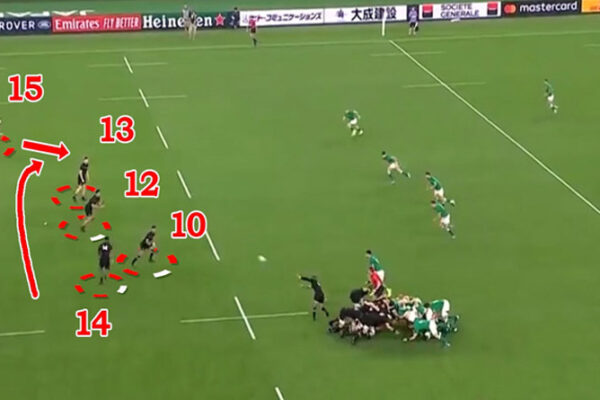
We already had some general, experience-based ideas about attacking structures, particularly the 1-3-3-1. However, the depth and precision of the analysis enabled us to improve both our understanding and the accuracy of our approach.
The course also provides excellent tools, including video analysis and PowerPoint presentations, for both coaches and players. I highly recommend it. Well done, Charles!
A useful rugby article should help a coach build the next session
That is the real difference between content that gets read once and content that becomes a reference. If a coach searches for rugby drills, breakdown exercises, defensive structure, or a college practice plan, the article has to connect ideas into a usable training sequence rather than just listing concepts.
Start with one objective
The session becomes clearer when one skill or tactical theme runs through the warm-up, the main drills, and the game-based finish.
Repeat the same cues
Players improve faster when the same words appear in training, review, and match preparation instead of changing every week.
Match real coaching needs
Coaches usually look for drills, plans, exercises, and age-level progression, so the article should stay practical from start to finish.
Make the article part of a coaching pathway
On Up Rugby Academy, internal linking works best when each page answers a different coaching problem. One article can explain the education pathway, another can focus on building a college rugby program, and this page can sit closer to the field by talking about rugby practice planning, drill selection, and weekly progression.
That structure helps the reader move naturally from general coaching development into practical implementation. It also strengthens the SEO logic of the site, because the internal links connect closely related topics instead of sending traffic toward unrelated pages.
In other words, the article should behave like a coaching session itself: one purpose, one progression, and clear links between each part.
Internal links to keep
- Use rugby coach certification in the USA when the paragraph talks about safe foundations, coach development, or formal learning.
- Use college rugby coaching in the USA when the paragraph moves toward team structure, season planning, or competitive program building.
- Keep this article focused on drills, training flow, coaching cues, and practice design so the three pages support each other without duplicating the same angle.
Build a Smarter Ruck Defence
A simple practice structure makes rugby drills more effective
Many coaches search for new exercises when the real need is a better session framework. A drill becomes far more useful when it sits inside a clear progression that moves from understanding to pressure, then from pressure to game transfer.
Start with movement and ball familiarization
Early in the session, players need to move, scan, communicate, and get touches on the ball. This is where simple handling patterns, support lines, or footwork-based warm-ups help the squad switch on without wasting time.
Introduce the core skill in a clean picture
If the focus is tackle technique, breakdown entry, or passing under pressure, coaches should first give players a version of the exercise they can understand clearly. That creates a shared picture before opposition and fatigue make the problem harder.
Add pressure, decisions, and consequences
This is the stage where the drill becomes rugby rather than repetition. Small-sided games, opposed phases, and conditioned scenarios force players to make real decisions instead of just completing a movement pattern.
Finish with game transfer and review
The end of the session should help the coach see whether the habit survived inside a realistic rugby picture. A short review then connects the training objective to the next match or to the next practice block.
Where this fits on Up Rugby Academy
This kind of article should act as the practical layer of the site. It naturally supports the more structural page on college rugby coaching in the USA, because once a coach understands how to build a program, the next question becomes how to organize the next training week.
It also connects well with rugby coach certification in the USA, since certification gives the learning framework and this article shows how that framework can appear on the field through drills, sequencing, and session logic.
That internal structure keeps each page useful on its own while strengthening the topical authority of the full site around rugby coaching, training design, and coach development in the USA.
Make the 1-3-3-1 Work
A strong rugby resource library should solve real practice problems
Most coaches do not need another vague article about mindset or intensity. They need useful rugby content they can bring straight onto the field: a breakdown exercise that fits a college squad, a defensive drill that teaches line speed, or a session idea that works for players with mixed experience levels.
That is why content for the USA market should stay close to the real language of coaching. Coaches search for drills, practice plans, contact progressions, attack structure, defense organization, and ways to teach players faster without overloading them with detail.
When an article answers those needs clearly, it does more than attract traffic. It becomes part of a coaching workflow, especially when internal links guide the reader toward the pages that explain the wider system behind the drill selection.
Use drills to teach decisions
The best exercises are not only about repetition. They create a picture where players must read space, communicate, and solve a problem that looks like the game.
Use progression to reduce confusion
A coach earns trust when the session moves logically from simple shapes to contested moments, instead of jumping between disconnected drills.
The best rugby articles are organized around the problems coaches face on the field
A coach rarely searches for content in abstract terms. Most of the time, the need is immediate: how to build a better defensive line, how to improve breakdown habits, or how to create drills that prepare players for real pressure instead of isolated movement.
Coaching a defensive system
Defence content works best when it stays simple and repeatable. Coaches need exercises that teach line integrity, inside-out communication, spacing, and the ability to apply pressure without breaking the structure.
That is why defensive drills often focus on movement together, decision-making under pressure, and clear coaching phrases that players can remember.
Teaching actions around the ruck
Breakdown content is valuable when it moves beyond theory and shows how to coach entry, reaction speed, body position, and support roles. Players need pictures they can read quickly, especially when fatigue changes their decision-making.
For many coaches, this is one of the most searched areas because it connects directly to continuity, possession, and defensive recovery.
Turning drills into a full session
A drill on its own is only part of the answer. The stronger article explains where that drill sits in the session, what the coaching focus should be, and how the practice builds toward a final game scenario.
This makes the content more useful for high school, college, and club coaches who need structure as much as inspiration.
Use internal links to connect the field to the bigger coaching picture
On Up Rugby Academy, this kind of article should stay close to practical rugby coaching content, but it becomes stronger when it points toward the wider learning path. When the paragraph talks about coach development, learning structure, or safe progression, a natural link to rugby coach certification in the USA makes sense.
When the article shifts toward how a team is built across a season, how training themes connect, or how a competitive environment needs more structure, the logical internal link is college rugby coaching in the USA.
This is how topical authority grows. One page helps the coach think, another helps the coach structure a program, and this one helps the coach run better sessions with drills that connect to the real game.
What This Course Will Give You
A complete framework to build, teach and adapt the 1-3-3-1 attacking system to your team.
A Complete Attacking Framework
Ready-to-Use Coaching Tools
A System Built Around Your Players
Players improve faster when the session follows a clear learning progression
One of the biggest mistakes in rugby coaching is moving too quickly from explanation to full chaos. Coaches often have useful drills, but the session loses value when players never get a clean picture first, or when the final game does not reinforce the same theme that was coached earlier.
Begin with a ball-based warm-up
The first minutes of practice should already connect to the theme of the session. Footwork, handling, communication, and reaction can all appear here, which saves time and helps players enter the main work with purpose.
Teach the core skill in a simple picture
Whether the focus is support play, tackle technique, or breakdown body position, players first need a version of the task they can understand clearly. This is where the coach defines the behavior before asking for speed or pressure.
Add pressure without losing the objective
The next step is not random intensity. The session gets better when pressure is added in a controlled way, with defenders, time, space restriction, or a scoring rule that forces the coaching point to appear again.
Finish with a game that reveals the habit
The final exercise should look enough like rugby that the coach can see whether the habit survived in a realistic picture. If the same decisions appear at the end of the session, the learning is moving closer to match day.
How this strengthens the Up Rugby Academy structure
This page should remain focused on the practical side of coaching: drills, sequencing, practice design, and how to make training transfer into performance. That makes it the natural on-field complement to college rugby coaching in the USA, which speaks more to program structure and team building over time.
It also supports rugby coach certification in the USA, because coach education is far more meaningful when readers can immediately see how those ideas show up inside a real session. In that sense, the internal linking does not just serve SEO — it mirrors the real path of a coach who learns, plans, and then applies.
The article should feel like a training week, not a pile of unrelated ideas
When an article targets coaches searching for drills and practice ideas, the structure matters as much as the information. Readers need a flow that starts with a problem, moves through a practical answer, and ends by showing how that answer fits into a larger coaching system.
Coaches need usable content, not just inspiration
The most searched terms around rugby coaching tend to revolve around drills, sessions, defense, breakdown work, and practice plans. That means the article has to answer those needs directly and avoid drifting into broad generalities.
Give them a session structure they can reuse
Templates and session skeletons are so useful because they help coaches repeat a clear sequence: warm-up, skill development, pressure, game transfer, and review. That structure is what makes drills easier to run and easier to remember.
Connect the article to the wider site
Use rugby coach certification in the USA when the copy leans toward education and foundations, and use college rugby coaching in the USA when it shifts toward program building and season planning.
End by reinforcing the coaching habit
The last part of the article should not simply repeat what came before. It should leave the reader with a stronger sense of how to coach the next practice, which drill fits the next problem, and how the site helps them move from learning to application.
How many blocks are left?
Not an endless amount. If you want the page to stay strong, the sensible move is to finish with one or two closing blocks that tie together drills, practice design, and internal links — then stop before the article becomes repetitive.
That approach is closer to what good coaching resources do: they stay focused, progressive, and easy to reuse rather than trying to cover everything at once. [web:46][web:51][web:56][web:101]
Good rugby content should connect learning, planning, and execution
A useful article for coaches in the USA should not stop at naming drills or listing exercises. It becomes more valuable when it shows how those drills fit inside a session, how that session fits inside a weekly plan, and how that weekly plan supports a bigger coaching model over the season.
That is where the internal structure of Up Rugby Academy becomes important. A coach who starts here to find practical ideas for training can then move naturally toward college rugby coaching in the USA for team structure and program building, or back toward rugby coach certification in the USA for the wider learning foundation.
This creates a reading path that mirrors real coaching development: first understand the framework, then organize the team, and finally deliver better training on the field.
The best coaching resource is the one you can use at the next practice
For many coaches, the real value of rugby content is simple: can it help improve the next session, clarify the next review, or make the next match preparation more coherent? If the answer is yes, then the article has done more than attract a click — it has supported the real work of coaching.
That is the role this page should play inside Up Rugby Academy. It should sit alongside rugby coach certification in the USA and college rugby coaching in the USA as the practical field-level layer of the site, where drills, practice logic, and coaching language come together in a format that busy coaches can actually use. [web:58][web:103][web:107][web:108]
Questions coaches often ask
This short FAQ helps answer the most common questions from rugby coaches looking for drills, session ideas, and better ways to structure training in the USA.
What makes a rugby drill useful for coaches?
A useful rugby drill solves a specific game problem. It should be easy to set up, clear to coach, and linked to a real objective such as breakdown speed, defensive spacing, tackle technique, or support play.
How should a rugby practice be structured?
A strong practice usually moves through a simple progression: ball-based warm-up, clear technical work, pressure or opposition, then a final game-based activity. This kind of sequence helps players transfer training habits into match situations.
How can coaches build better college rugby sessions in the USA?
College coaches usually need sessions that are clear, repeatable, and adaptable to mixed experience levels. For the wider program-building side, see college rugby coaching in the USA.
Why does coach education matter before choosing drills?
Coach education helps you understand why a drill belongs in a session, what behaviors to watch, and how to progress the activity safely. For that foundation, read rugby coach certification in the USA.
What do rugby coaches usually search for online?
Many coaches search for rugby drills, practice plans, tackle exercises, defensive systems, breakdown work, and ways to coach players with different experience levels. That is why practical content usually performs better than generic advice.