
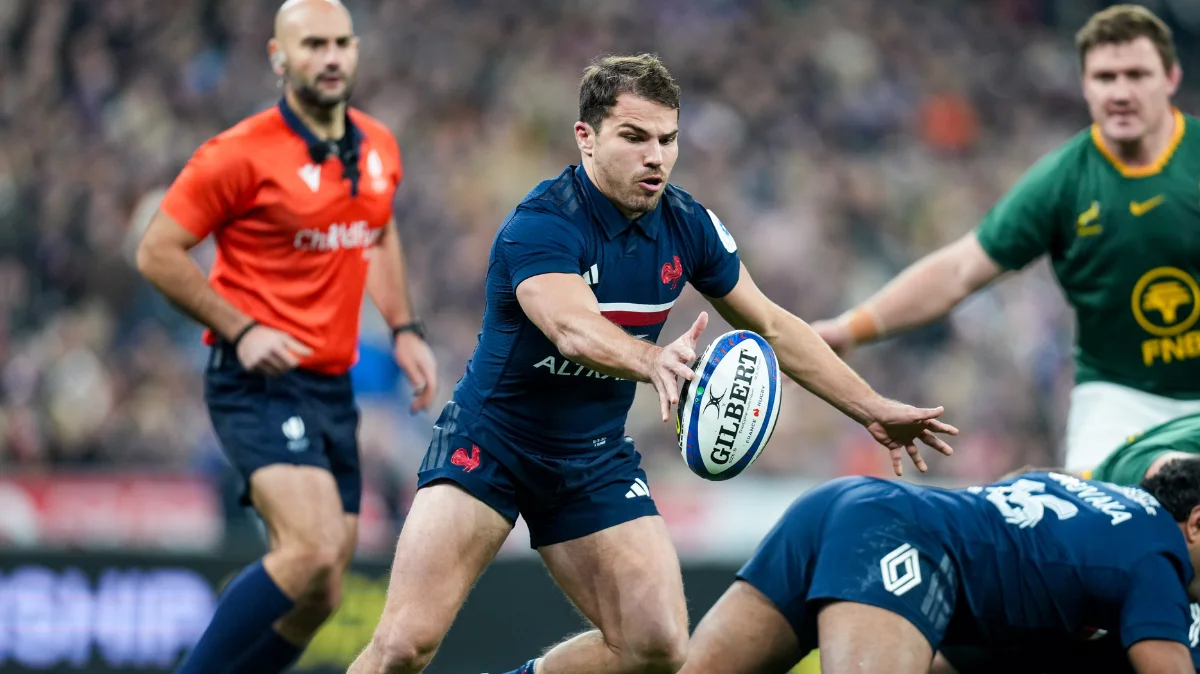
Beating the Springboks Without Winning the Scrum: Three Tempo Lessons from France 21-19
France 21-19 South Africa: three tempo lessons for club, school and college coaches
France beat the world champions on Friday night in Paris, and the score hides how they did it. Charles of Up Rugby watched the match as a coach, and what stood out was a deliberate choice: play fast, keep the ball alive and never let the Springboks settle.
It follows his latest video, “Comment battre les Boks sans gagner la mêlée ?” (How do you beat the Boks without winning the scrum?), in French. This is not a full match report. It is a short look at what a non-professional coach can take from a Test match, and what is worth leaving on the video.
The video
What happened at the Stade de France
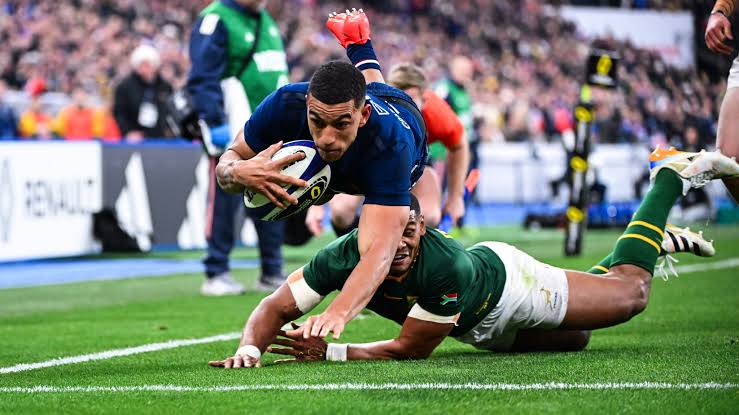
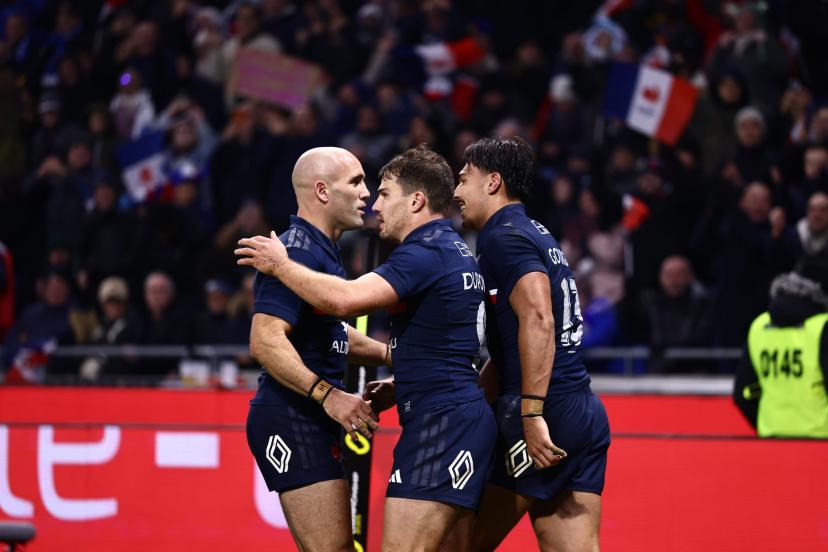
France won 21-19 on Friday 13 November 2026 in the Nations Championship. They led 21-7 at the break thanks to tries from Grandidier-Nkanang, Attissogbe and Bielle-Biarrey, all converted by Lucu. South Africa came back with twelve unanswered points after half-time, including a Marx try late on that Libbok could not convert.
It was an interrupted match: four yellow cards and one red, with the red going to Wiese for a dangerous clear-out on Gourgues. Press reports note that the sides were at full strength for only about thirty minutes. France also had to cope with several first-choice fly-halves being unavailable, with Antoine Dupont playing at 10.
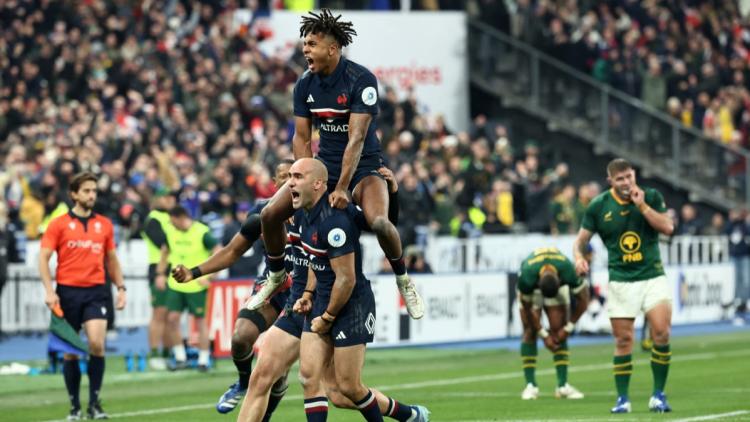
Tempo as a decision, not an accident
A match this intense is not a coincidence. Charles’s reading is that France decided before the game to play, and to keep that philosophy whatever the score. The reason is simple: South Africa’s strength lies in the scrum, the lineout and the physical contest. If you spend the evening in set pieces, you play their game. If you keep the ball alive and make them run, they get tired.
The point for a club or school coach is not that France played fast. It is that they chose to, and then made specific decisions that supported the plan.
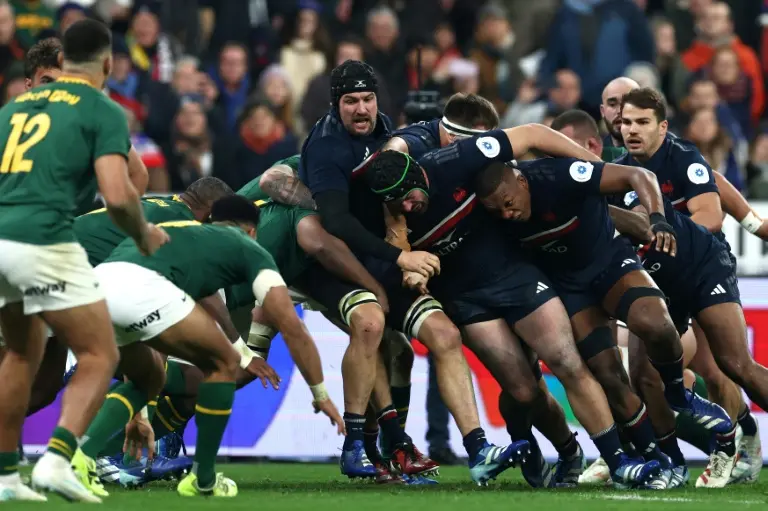
How France put tempo into the game
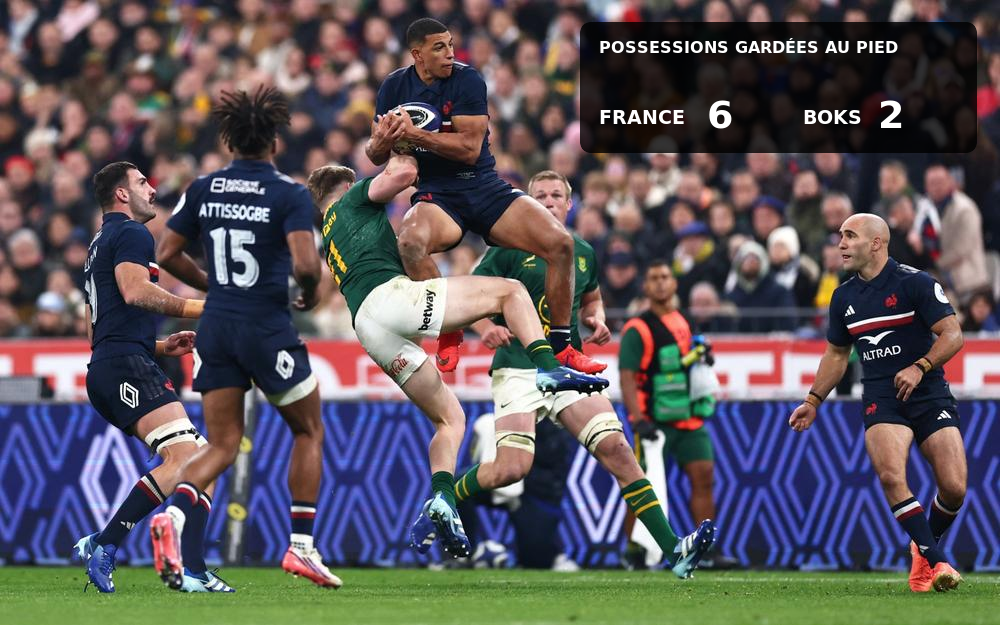
Keep the ball in play when you kick
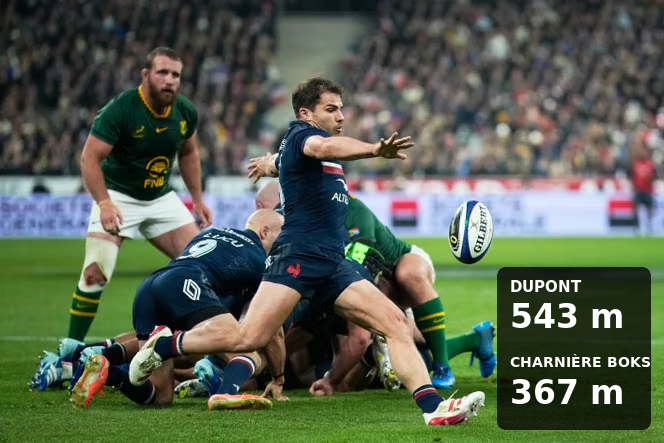
Charles’s first observation is about kicking. France kept their kicks on the pitch rather than finding touch. That has a price: you need players who can contest in the air and a chasing line that arrives together. By Charles’s count, Dupont kicked 21 times for 543 metres, against 367 metres for South Africa’s two half-backs combined, and France kept possession on six of their own kicks, against two for South Africa.
For a coach at club, school or college level, the question is not whether to copy that number. It is whether your players know what to do after a kick: who chases, who contests, who covers behind. Without that, kicking in play is a gift to the other team.
The lineout is a tempo tool, not only a set piece
Charles timed a French throw-in in the first half. The ball went into touch at 9 minutes 18 seconds, and the lineout took place at 9 minutes 26 seconds, eight seconds later, with the pack arriving at a run. The aim is to take away the defence’s time to organise, not to get cheap points.
At amateur level, you can start with something much simpler: time your own lineouts in training and ask players to be ready to throw quickly when the situation allows it. A lineout that takes forty seconds in your session will take forty seconds on Saturday.
Play on, even after a poor ball
Charles also noticed France choosing to keep the game moving after imperfect moments. In the first half, they played with the hand off a loose South African kick rather than waiting for everyone to reset. It came with a cost, since a penalty followed, and Charles is the first to say that not everything was done well. Another example came around the 48th minute, when a South African counter-attack from their own five metres ended in touch and France played the lineout quickly.
By Charles’s count the ball was in play for about 39 minutes, a figure he believes is uncomfortable for South Africa. That is his own measure, and it is worth reading as a signal, not a rule.
How to use this at club, school or college level
Do not try to copy Test-match tempo. Agree a simple tempo plan with your players before the match: when will we play quickly, and what will we do after a kick or a mistake? Then review it afterwards. You will probably find that the plan only works if players share the same reading of the game, which is why a common structure helps.
If you are working on that structure, our guide to the 1-3-3-1 system and our practical guide to rugby tactics and strategy are good places to start. For quick decisions after a turnover, read what to do in the first seconds of a counter-attack, and for the nine’s role in quick ball, when the scrum-half should carry. You may also like our look at France v Fiji.
Give your team a structure they can play fast with
Speed only works when every player knows where to stand and what to look for. Our courses help club, school and college coaches build that shared picture in attack and in defence.
See the 1-3-3-1 courseOr discover the Defensive Ruck Structures course
Frequently asked questions
What was the score in France v South Africa?
France beat South Africa 21-19 at the Stade de France on Friday 13 November 2026, in the Nations Championship. They led 21-7 at half-time.
What can club and school coaches learn from France’s tempo?
Three ideas travel well: keep kicks in play instead of kicking to touch, play lineouts quickly, and keep playing at pace even after a mistake. Decide your tempo plan before the match.
Should amateur teams copy Test-match tempo?
Not literally. Adapt the idea to your players’ fitness and skills, and agree the plan in advance so everyone knows when to speed the game up.
- Up Rugby on YouTube: Comment battre les Boks sans gagner la mêlée ? (in French)
- Équipe de France: Les Bleus font tomber l’Afrique du Sud (21-19), in French
- RugbyPass: seulement cinq minutes à 15 contre 15 en seconde période, in French
- Sky Sports: France 21-19 South Africa
Timings and match statistics quoted come from Charles’s own review of the match.
